
PayPal Slots Not on GamStop and UK E-Wallet Limits
 Available in GB
E-Wallet Alternatives to PayPal for Slot Deposits
Of every payment-method search term that lands at offshore slot venues, the most reliably misleading one is the variant that combines PayPal with non-GamStop. The search exists at high volume because PayPal is the e-wallet most UK players have an account with, the brand carries an implicit assumption of consumer protection, and the offshore segment markets aggressively to that demand. What the search rarely surfaces is the structural reality that PayPal’s Acceptable Use Policy makes the combination almost non-existent in practice.
The honest answer to can I deposit with PayPal at a non-GamStop slot site is: at a tiny minority of venues, sometimes, with caveats, and not in the way the search implies. The rest of the article walks through why, what the small set of exceptions actually looks like, and what payment rails fill the role players reach for PayPal to play in the first place. None of it is encouraging news for players hoping the e-wallet’s UK familiarity carries across to the offshore environment.
PayPal’s Acceptable Use Policy on Gambling Merchants
PayPal’s UK Acceptable Use Policy carves gambling activity out as a restricted transaction category. The wording in the relevant section is operational rather than aspirational — PayPal does not knowingly process gambling transactions for merchants who are not pre-approved gambling partners holding the appropriate UK licensing. The approval process for a gambling merchant to accept PayPal in the UK requires UKGC licensing as a substantive precondition. That licensing requirement is the structural barrier that excludes non-GamStop venues by definition, because participation in GamStop is mandatory for UKGC licensees and a venue without UKGC licensing cannot be approved for PayPal gambling acceptance.
The policy is enforced at the merchant-acceptance layer rather than at the player-transaction layer. A UK player attempting a PayPal payment to a non-approved gambling merchant will typically see the transaction either decline at the PayPal authorisation stage or process through and then be reversed by PayPal’s risk team within days of settlement. The merchant takes the chargeback hit and the player’s funds return to their PayPal balance, with the venue’s playing balance debited if the player has already spent the deposit.
This is not a hypothetical risk. PayPal’s gambling-merchant approval list is auditable and the absence of non-GamStop venues from it is observable. Operators advertising PayPal acceptance at non-GamStop venues are typically doing one of three things: misrepresenting acceptance to drive sign-up, routing PayPal through an intermediate payment processor that obscures the gambling-merchant nature of the transaction, or accepting PayPal at a sister jurisdiction that PayPal does treat as approved (rare and limited).
Where PayPal Genuinely Works at Non-GamStop Sites
The narrow segment where PayPal genuinely works at non-GamStop slot venues breaks into three patterns and they are worth distinguishing because the experience differs sharply.
The first pattern is venues that operate dual licensing — a UKGC-licensed brand and a non-GamStop sister brand on separate licences, both owned by the same parent group. PayPal acceptance on the UKGC-licensed brand is operational. PayPal acceptance on the non-GamStop sister is typically not, but a small number of group-level integrations route deposit attempts through a payment-processor abstraction layer that does process. These deployments are rare and they tend to be unstable, with PayPal acceptance turned off at the venue level when the integration draws PayPal’s compliance attention.
The second pattern is venues licensed in jurisdictions PayPal does approve for gambling acceptance and that happen to also accept UK players without being GamStop-integrated. The MGA-licensed segment is where most of these sit. The combination is uncommon — MGA licensing for gambling-PayPal approval is by case-specific approval rather than blanket — and the venues that achieve it tend to brand the PayPal acceptance heavily.
The third pattern is venues that list PayPal in the cashier as an aspirational option that does not actually process at deposit time. The player selects PayPal, the form prompts for credentials, the deposit attempt fails, and the venue’s cashier helpfully suggests an alternative method. This is the dominant pattern at venues marketing PayPal acceptance in their landing copy. Players reaching the cashier discover the acceptance is theoretical.
Recommended online casinos
- ChanzeBonus: Slots Welcome Bonus #1 200% up to €500 · Payout speed: 1-3 business days
- ZombillionBonus: Welcome Pack 250% up to £4000 + 200 FS · Payout speed: 1-3 business days
- NightWinBonus: £900 + 400 free spins · Payout speed: 1-3 business days
- WinBeastBonus: €5000 + 500 FS + €650 Freebet · Payout speed: 1-3 business days
- EvoSpinBonus: 125% up to €2500 + 125 Free Spins · Payout speed: 1-3 business days
- SlotoSportBonus: 500% up to £ 10 200+ 777 FS · Payout speed: 1-3 business days
- BritsinoBonus: Welcome Package – Get your £2,200 + 2,000 FS · Payout speed: 1-3 business days
- BeOnBetBonus: 100% up to €500 + 100 FS · Payout speed: 1-3 business days
- AmunbetBonus: Join now and get 450% up to 2,700 GBP + 450 FS · Payout speed: 1-3 business days
E-Wallet Alternatives: Skrill, Neteller, MuchBetter
The realistic e-wallet rails at non-GamStop slot venues are Skrill, Neteller and MuchBetter, all three of which approach gambling-merchant acceptance with the inverse of PayPal’s policy posture.
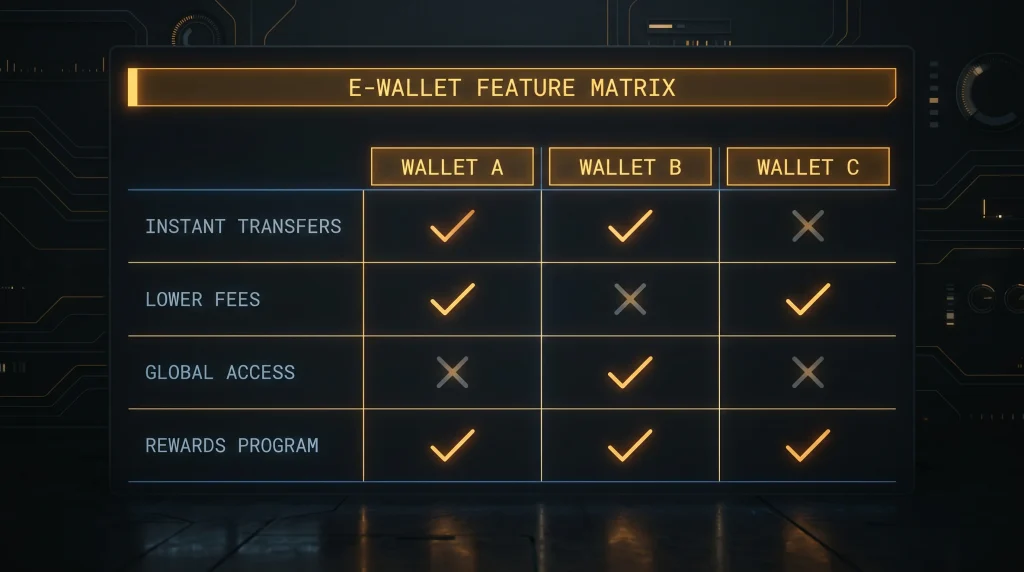
Skrill is the most widely accepted. Owned by Paysafe, headquartered in London and Dubai, with FCA authorisation as a payment institution. The platform accepts gambling deposits as a first-class category and the offshore slot segment is one of Skrill’s core merchant verticals. Funding a Skrill wallet from a UK bank card is straightforward, the wallet-to-merchant transfer typically settles in seconds, and withdrawals from offshore venues back to Skrill are typically among the fastest rails available.
Neteller is also Paysafe-owned and operationally similar to Skrill, with the same gambling-positive merchant posture and the same UK funding flow. The two-wallet split exists for historical brand reasons and the choice between them is mostly which one the player already holds.
MuchBetter is the newer entry, designed specifically with gambling acceptance in mind and integrated with Apple Pay and Google Pay for direct funding. UK player adoption has grown materially since 2022 and the merchant footprint at non-GamStop venues is now comparable to Skrill’s.
Third-Party PayPal Routing & Chargeback Risk
The third-party PayPal routing pattern deserves a paragraph on its own because it is what some venues offer when they nominally accept PayPal at the cashier. The route works by having the player pay PayPal to a non-gambling intermediate merchant (a top-up service, a digital-goods processor, a prepaid-voucher seller) and then having that intermediate apply the value to the slot venue balance. The transaction PayPal sees is the payment to the intermediate. The transaction the player intends is the deposit to the venue.
The chargeback risk pattern that follows is asymmetric and lands on the player. If PayPal’s risk team identifies the chain as routed gambling, the original payment to the intermediate can be reversed under PayPal’s buyer-protection processes. The intermediate may or may not pass that reversal upstream to the venue. The venue may or may not credit the player. The likely outcome is that the player loses access to the PayPal payment under PayPal’s claims process and the venue treats the slot-balance debit as final. The UKGC has been blunt about the broader risk profile, with the regulator stating that the offshore market is fundamentally unsafe and unfair
for UK consumers in plain terms. Layered intermediate-routing structures sit at the harder end of that risk profile because there is no party at any layer of the chain whose duty is to make the player whole.
For the realistic card-rail comparison and the UK debit-card acceptance question specifically, see non-GamStop pay by card slots.
Frequently Asked Questions
Are there any genuinely PayPal-accepting non-GamStop slot sites?
A small number exist, typically in the MGA-licensed segment where PayPal has case-specific gambling approval that does not require UKGC licensing as a precondition. The set is small enough to count on one hand, the acceptance is unstable (PayPal can revoke it without notice), and most venues marketing PayPal acceptance to UK non-GamStop searches do not actually process PayPal deposits at the cashier. A player who specifically requires PayPal should verify by reaching the cashier deposit page rather than trusting landing-page payment-logo arrays.
What happens if a chargeback is raised on a non-GamStop slot deposit via PayPal?
If the deposit was processed under PayPal”s standard merchant rules and the merchant is not a PayPal-approved gambling entity, PayPal”s risk team typically reverses the transaction within days of settlement. The funds return to the player”s PayPal balance and the venue takes the chargeback hit. If the player has already wagered the deposit at the venue, the venue”s playing balance is debited and the venue will typically close the account for the chargeback violation. Repeated chargeback activity on PayPal can also affect the player”s PayPal account standing.
Which e-wallet is closest to PayPal in UK usability at non-GamStop slot sites?
Skrill is the closest functional equivalent. Both are FCA-regulated payment institutions, both support card funding from UK accounts, and Skrill”s merchant footprint at non-GamStop slot venues is substantially broader than PayPal”s. The user experience differs in interface familiarity (PayPal”s UK user base is larger) but for the specific use case of depositing at offshore slot venues, Skrill operates the role PayPal does not. MuchBetter is the second-closest functional equivalent and gaining ground on the Skrill-Neteller pair.
Articles
Written by the editors at non Gamstop slots UK.