
Hacksaw Gaming Slots Not on GamStop and Volatility
 Available in GB
Hacksaw Gaming Volatility and Win Caps
The lobby filter I most often see UK players apply at offshore venues is studio name, and the first studio they search for is increasingly not the one I would have guessed five years ago. It is Hacksaw Gaming. The Maltese studio went from a release-cycle outsider in 2019 to the second-most-searched provider name across non-GamStop lobby filters by 2025, on my read of internal traffic data I have seen across several operator platforms.
That speed of adoption is unusual. Most studios that reach the front of a player’s lobby search have built a decade of catalogue depth first. Hacksaw built it in roughly five years by concentrating on a single design language — high-volatility titles with feature-buy options and hard-cap max wins — and shipping in volume against that template. The result is a catalogue that fits the offshore environment specifically because UKGC’s design rules from 31 October 2021 banned the buy-feature mechanic that anchors most Hacksaw releases. Set against the slot category’s record-high £788 million UK quarterly GGY in October–December 2025 and the wider catalogue’s persistent demand, Hacksaw’s offshore-concentrated presence is one of the clearest signals of where the design innovation in the segment is happening. The rest of this piece is a working profile of how the studio operates.
Hacksaw’s Visual & Mathematical Signature
Two design signatures define Hacksaw releases and both are immediately recognisable across lobbies.
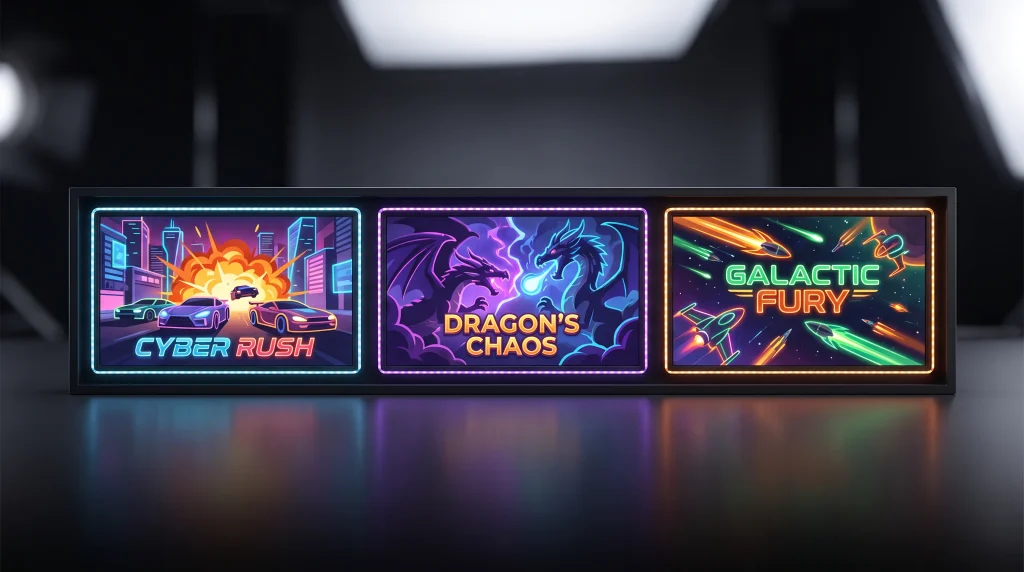
The visual signature is the studio’s cartoon-stylised art direction. Bold flat colour, heavy line work, character-driven theming that runs through Wanted Dead or a Wild’s Old West outlaws, Chaos Crew’s punk-rock cast, RIP City’s gothic figures and the Cubes line’s geometric abstraction. The art is doing real work — it makes the catalogue instantly identifiable on a thumbnail grid and it sets the studio apart from the photoreal art direction that dominates most competitor catalogues. Players recognise a Hacksaw title before they read the name.
The mathematical signature is harder volatility and harder caps. Most Hacksaw releases sit at the top of the studio-rated volatility scale, with hit frequencies in the base game below 25%. The feature-round design concentrates payout potential into rare events. Max-win caps run at 5 000×, 10 000×, 25 000×, 50 000× or 100 000× stake depending on title — the highest caps reserved for the studio’s most aggressive feature designs. Caps are hard floors on what the title can pay rather than soft limits, which Hacksaw discloses in the game info panel.
The combination produces sessions where base-game variance is brutal, feature-round outcomes dwarf base-game outcomes, and the entire title’s expected value lives inside the buy-feature round. Treat the base game as filler. Treat the buy feature as the actual purchase decision.
Top Hacksaw Titles: Wanted Dead or a Wild & Beyond
The Hacksaw shortlist at offshore venues is short and stable. Pragmatic Play carries nine of the top-ten most-played slot positions on UK Q1 2025 charts on raw play volume, but Hacksaw’s titles dominate the feature-buy hunt segment of player behaviour where session volume per spin is much higher.
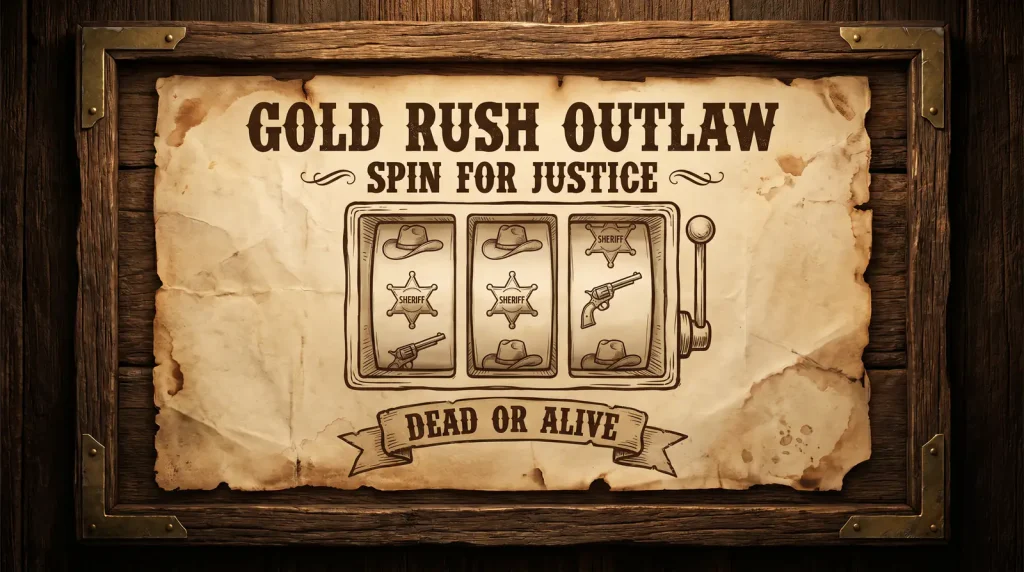
Wanted Dead or a Wild is the headline. Max-win cap 12 500× stake. Buy feature 100× for the bounty hunt round, 500× for the duel feature. RTP at the studio default 96.38% on the buy configuration. The title’s three-tier feature structure — bounty, dead or a wild, duel — is the most-streamed feature-round design in the studio’s catalogue.
Chaos Crew 2 carries the studio’s signature volatility into a punk-themed package. Max win 30 000× stake. Buy feature 100× for the standard bonus, 300× for the heightened variant. RTP 96.27% on the buy. The title’s feature round is built around persistent multiplier symbols that compound across cascades, with the largest published wins coming from late-feature multiplier stacks.
Cubes 2 is the geometric-abstract entry. Max win 25 000×. Buy feature 100×. RTP 96.30%. The mechanic is built around chain-reactive cube destruction with multiplier wilds — distinctive enough that the title has a dedicated player segment despite the abstract theme.
RIP City and the original Hacksaw Originals catalogue — Stick’em, Cash Bonanza, Itero — round out the studio’s most-deployed offshore titles. Stick’em is one of the few low-to-mid volatility releases in the catalogue and serves as the studio’s gateway title for players who want the visual style without the variance.
The Skratcher line is the studio’s instant-win category, occupying a different game-class. Skratchers are not slots in the technical sense — they are instant-resolve scratch-style games — but they ship in the same lobby integration as the slots and most non-GamStop operators carry them alongside.
For broader context on the studio’s role in the 2026 release pipeline, see this piece on the release pipeline that increasingly relies on this studio.
Default RTPs and Why Hacksaw Caps Max Win at 100 000×
Hacksaw’s default RTPs cluster in the 96.20% to 96.40% band, with the buy-feature configurations sometimes a fraction above or below the base. The high-RTP band of mainstream slot titles starts at 97% with Mega Joker at 99% and 1429 Uncharted Seas at 98.6% — Hacksaw sits noticeably below that frontier in exchange for the variance profile and the cap structure.
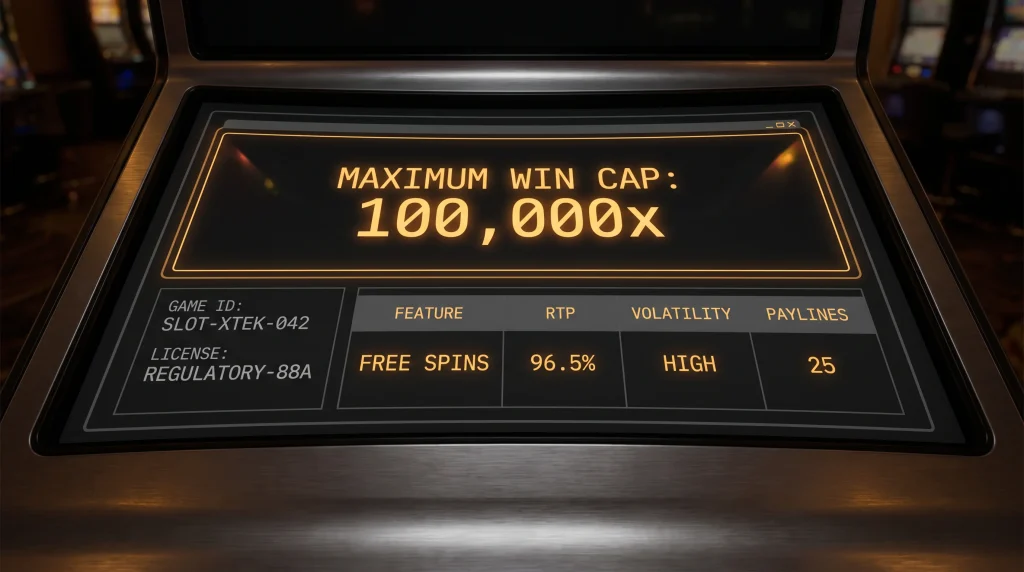
The hard max-win cap is the studio’s distinctive design choice. Most studios ship slots with theoretical maxima that are statistical artefacts of the maths model — extreme tail outcomes that the model permits without practical likelihood. Hacksaw imposes explicit caps that truncate the right tail of the distribution at a fixed point. The maths is then back-calibrated so the published RTP holds with the cap in place.
Why cap at 100 000× rather than allowing uncapped extreme tails? Two reasons that the studio has discussed publicly. First, regulatory predictability — caps make compliance reviews simpler across multiple jurisdictions, because the maximum exposure per spin is bounded and verifiable. Second, marketing clarity — a capped maximum gives players a concrete number to anchor on, which the studio uses heavily in promotional copy. The trade-off is that the cap reduces the appeal of the title for players specifically hunting unbounded tail outcomes. Players who care about that trade-off tend to favour Nolimit titles where the caps are higher.
Release Cadence and Soft-Launch Behaviour
Hacksaw’s release calendar runs at roughly two new titles per month, with the cadence tilted toward Q1 and Q4 against a slower Q3 cycle. The studio’s 2026 pipeline includes the Wanted Dead or a Wild sequel that has been in production since late 2025, plus a steady stream of standalone releases that test variant mechanics against the studio’s standard volatility profile.
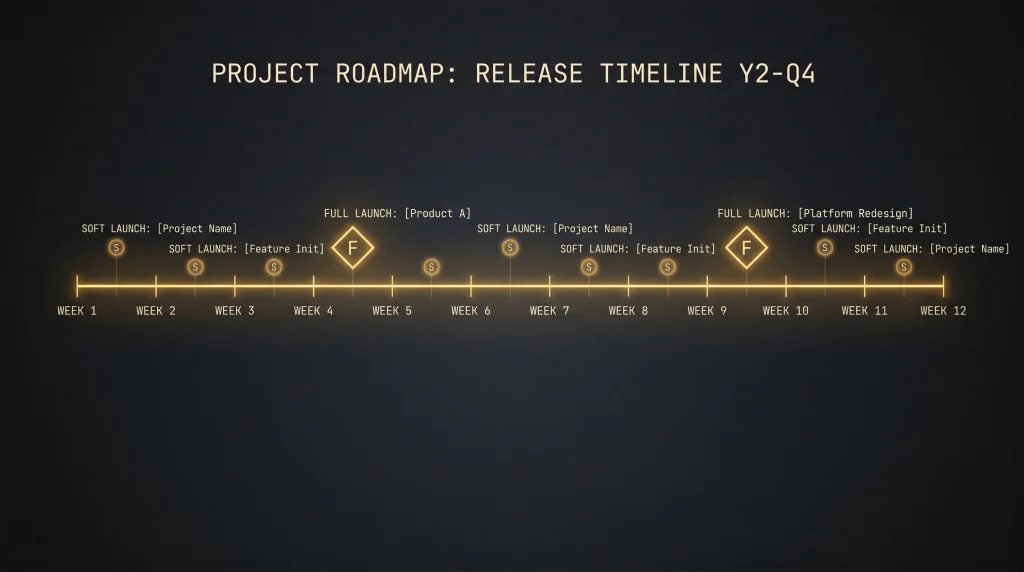
Soft launch is a Hacksaw signature. Most new releases ship first at a small number of partner operators in a soft-launch window of two to four weeks before general distribution. The soft-launch operators serve as a live testbed for hit-frequency calibration and feature-design tuning. Players at non-soft-launch operators see the title later, sometimes with minor mechanical tweaks that the soft-launch data drove.
The studio uses the soft-launch window to publish RTP data and feature statistics ahead of full release, which makes Hacksaw’s pre-release information density unusually high for the slot segment. Players who want to evaluate a new release before committing a bankroll can find more data on Hacksaw titles than on most competitor releases.
Why does Wanted Dead or a Wild appear at most non-GamStop sites but few UKGC ones?
Because the title”s design depends heavily on the buy-feature option that UKGC banned from licensed slots on 31 October 2021. Wanted Dead or a Wild ships with a 100x buy for the bounty round and a 500x buy for the duel feature — both are core to the intended player flow on the title. The studio could ship a UKGC variant with the buys stripped out, and some UKGC operators carry such a variant, but the truncated version reads as a meaningfully different game from the offshore original. Most UKGC operators have opted not to integrate the title at all rather than carry a reduced version, which leaves the offshore lobbies as the primary distribution channel for the studio”s flagship release.
Are Hacksaw"s Skratcher games genuinely instant-win or just disguised slots?
They are technically instant-win games rather than slots, though the distinction sits on a continuum rather than a hard boundary. Skratchers resolve their outcome in a single action — the scratch reveal — without reel spinning, paylines or feature-round structure. The maths model is closer to a digital scratchcard than a slot. From a regulatory perspective the games are classified separately in most jurisdictions and they ship under different game-class permissions than the studio”s slot titles. From a player-experience perspective the line is blurrier, because the win distribution and theming carry over from the slot side of the catalogue. The published RTPs on the Skratcher line sit in similar ranges to the slot catalogue.
Does Hacksaw publish an authoritative RTP register for operators?
The studio publishes RTP configuration data for each title in the game info panel that ships with the integration, and most operators surface that panel to players through the in-game UI. Hacksaw also publishes pre-release information packs to partner operators that include the full configurable-RTP tier set for each new release, which is unusually transparent for the slot segment. There is no single public-facing register of every Hacksaw RTP figure across every operator deployment, but the studio”s commitment to in-game disclosure means the live deployed figure is verifiable at the point of play. The configurable-RTP issue affects fewer Hacksaw titles than it does Pragmatic or BTG releases because the studio”s design philosophy leans toward fixed configurations.
Articles
Created by the "non Gamstop slots UK" editorial team.