
Slots Without Stake Limits and Uncapped Offshore Betting
 Available in GB
Impact of Stake Caps on UK Slot Players
The 9 April 2025 cap on online slot stakes at £5 per spin is the single most consequential design intervention in the UK gambling market in the last decade. Within weeks of the cap taking effect, every UKGC-licensed slot venue had reconfigured its stake controls down to the cap and the player population that had been spinning at £10, £20, £50 or higher had three choices: reduce the per-spin stake to fit the cap, reduce session frequency to compensate, or migrate spend to operators outside UKGC’s licensing perimeter where the cap does not apply.

The migration pattern is visible in the data. Black-market share of UK gambling activity sat at 0.43% in the 2020 baseline and rose to roughly 9% by 2025, with offshore-segment growth concentrating in the months immediately following the cap implementation. £379 million in earnings by unlicensed operators from UK players in the first six months of 2025, against an estimated £16.6 billion in annual UK player wagers routed to offshore venues, sets the scale. This piece walks through what the caps actually do at UKGC venues, what the offshore alternative looks like at higher stakes, and how UKGC is reading the migration pattern.
The £5 and £2 Caps: Who They Cover and When
The cap framework has two tiers and they apply to different player populations on different dates.
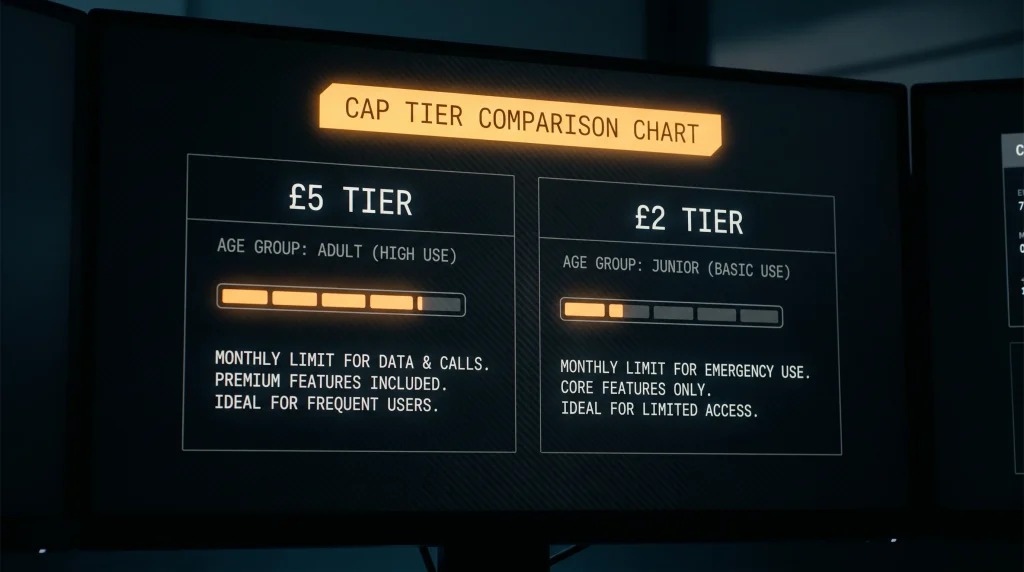
The £5 cap is the general adult cap that came into effect on 9 April 2025. It applies to all online slot games at UKGC-licensed operators and caps the maximum per-spin stake at £5 regardless of the player’s age, deposit history or stated stake preference. The cap is enforced at the operator level — venues simply do not present stake options above the cap in the title’s stake selector. There is no opt-in or override mechanism. The cap applies to all licensed slot content uniformly.
The £2 cap is the additional cap that came into effect on 21 May 2025 and applies specifically to players aged 18–24. The age-banded cap operates on top of the general £5 cap, with UKGC venues required to identify players in the age band and apply the £2 ceiling to those accounts specifically. The mechanism uses the player’s verified date of birth, captured at KYC, to apply the age-banded restriction automatically.
The caps apply only at UKGC-licensed venues. Offshore venues operating under Curaçao, MGA, Anjouan or other non-UKGC licensing are not bound by the caps and do not implement them. The structural arbitrage between UKGC and offshore venues on stake size is therefore complete — a £20 spin is not available at any UKGC-licensed venue and is widely available at non-UKGC venues serving UK players.
Behavioural Impact: Session Length and Spin Volume
The behavioural impact of the caps at UKGC venues has been measured directly in the post-cap telemetry. Sessions longer than one hour fell 16% year-on-year in Q3 2025-26, dropping to 8.9 million long sessions across the licensed UK market. The average session length contracted by 2 minutes to 16 minutes against the pre-cap baseline. Both metrics moved in the direction the cap policy intended.
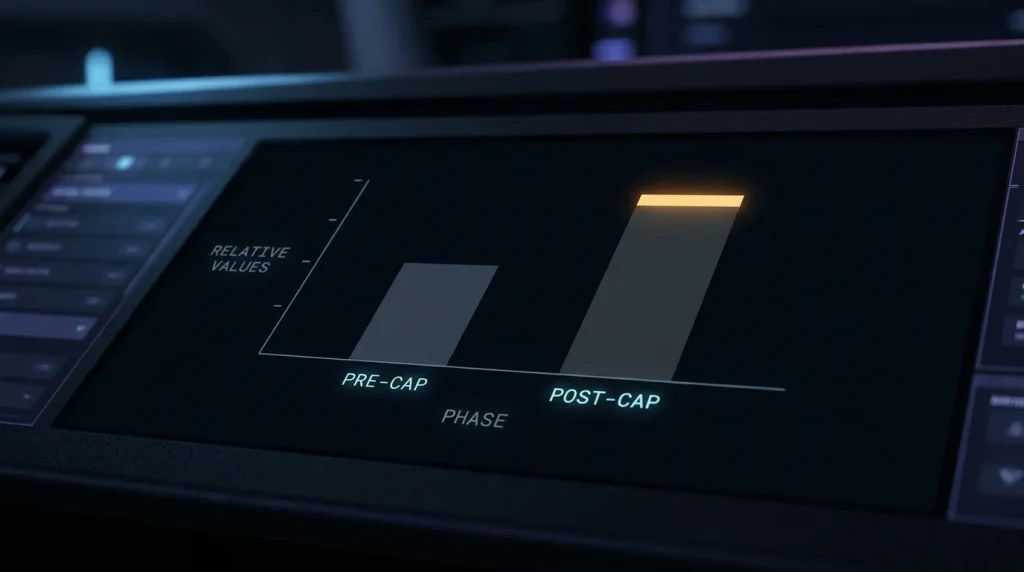
The metric that did not move in the intended direction is total slot activity. Q3 2025-26 slot GGY across UKGC-licensed venues hit £788 million, an all-time high and up 10% year-on-year against the equivalent pre-cap quarter, with 25.7 billion spins across the period. The cap did not reduce the volume of slot activity — it concentrated the activity into shorter sessions at lower per-spin stakes, with the activity volume holding up through higher session frequency and longer per-spin engagement at the lower stakes.
UKGC’s own assessment of the cap framework is direct on this point. The regulator’s October 2025 review noted that stake limits do not reduce the time players spend gambling but do reduce average session length
. The cap is functioning as a session-length compression tool rather than a participation reduction tool, with the consequence that the policy’s behavioural-protection benefits operate in a different dimension than the headline framing implied.
The offshore migration sits in the other side of the same calculus. Players whose stake preference sat above £5 and whose behavioural pattern did not adapt to the cap moved spend to offshore venues, with the migration concentrating in the higher-stake segment specifically. The cap’s behavioural effect at UKGC venues is therefore partly an artefact of the player population that remained at UKGC venues being the population for whom the cap was a non-binding constraint.
What “No Stake Cap” Actually Looks Like Offshore
The offshore segment’s lack of stake cap manifests differently from how the marketing framing implies. The absence of a regulatory cap does not mean unlimited stakes — operator-level and content-level caps still apply.
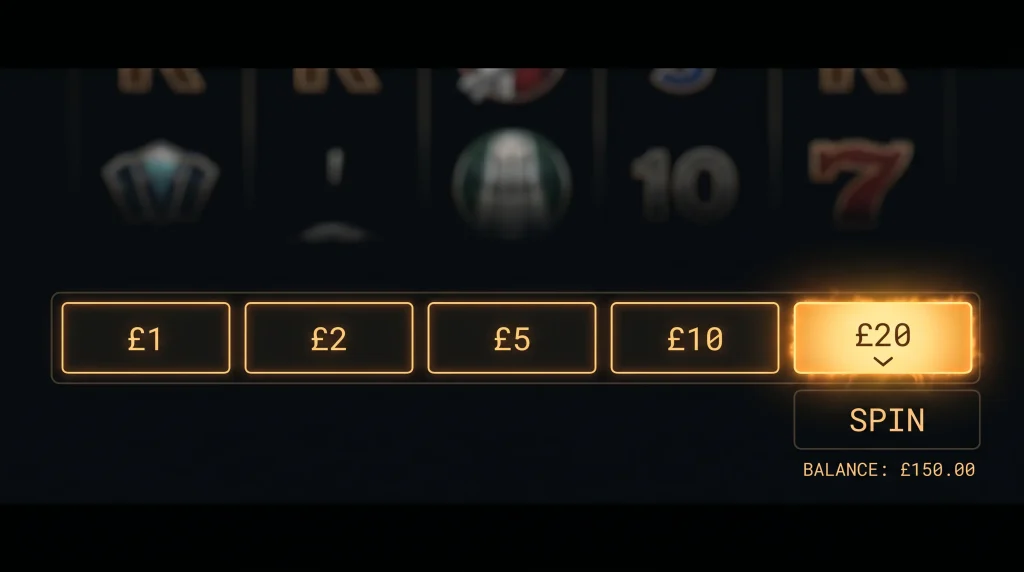
Operator-level caps at offshore venues typically run at £100 to £500 per spin on standard slot content, with VIP-tier players sometimes able to access higher ceilings on case-by-case basis. The caps are commercial choices by the operator to manage variance exposure on the operator’s side rather than regulatory requirements. Players seeking spin sizes above £500 are typically routed to bespoke VIP arrangements where the cap is negotiated at account-management level rather than configured at the cashier.
Content-level caps are set by the slot studio at title certification and are baked into the title’s mathematical model. Most slot titles cap maximum stake at the studio level somewhere between £100 and £500 depending on title volatility and max-win design. The cap is invisible to the player as a cap because the venue’s stake selector simply does not present options above the title’s ceiling — the player experiences the constraint as the slot’s normal stake range rather than as a regulatory or operator-level cap.
The practical effect for an offshore player wanting genuinely high stakes is that the offshore segment offers £20, £50, £100 and occasionally £200 stake options at the upper end of standard non-VIP access. Stakes above that level require operator-tier upgrade or VIP enrolment in most cases. The framing of offshore as ‘no stake cap’ is accurate in the sense that no regulator-imposed cap applies but inaccurate in the sense that meaningful operational caps exist throughout the offshore segment.
Recommended online casinos
- ChanzeBonus: Slots Welcome Bonus #1 200% up to €500 · Payout speed: 1-3 business days
- ZombillionBonus: Welcome Pack 250% up to £4000 + 200 FS · Payout speed: 1-3 business days
- NightWinBonus: £900 + 400 free spins · Payout speed: 1-3 business days
- WinBeastBonus: €5000 + 500 FS + €650 Freebet · Payout speed: 1-3 business days
- EvoSpinBonus: 125% up to €2500 + 125 Free Spins · Payout speed: 1-3 business days
- SlotoSportBonus: 500% up to £ 10 200+ 777 FS · Payout speed: 1-3 business days
- BritsinoBonus: Welcome Package – Get your £2,200 + 2,000 FS · Payout speed: 1-3 business days
- BeOnBetBonus: 100% up to €500 + 100 FS · Payout speed: 1-3 business days
- AmunbetBonus: Join now and get 450% up to 2,700 GBP + 450 FS · Payout speed: 1-3 business days
UKGC Reaction to the Migration Pattern
UKGC’s reaction to the offshore migration since the April 2025 cap has been a combination of expanded enforcement activity, regulator-coordinated messaging on the risks of offshore play, and policy statements treating the offshore segment as a market-distortion problem rather than as a consumer-choice problem.

The enforcement expansion has focused on payment-processor disruption and affiliate-network disruption rather than direct action against offshore operators. Around 700 unlicensed operators and 1 600 affiliates targeting UK players were identified by the regulator in the most recent enforcement-cycle reporting. The disruption tactics include working with payment-rail intermediaries to restrict offshore-venue acceptance, working with hosting providers and domain registrars to restrict access infrastructure, and working with platforms (Meta, Google, X) to restrict affiliate-marketing distribution.
The messaging has emphasised the absence of consumer protections at offshore venues rather than the technical illegality of UK player participation. UK law does not criminalise the UK resident for participating in offshore gambling, and the regulator’s messaging therefore frames the choice as an unprotected-versus-protected question rather than a legal-versus-illegal question. The £150 net-deposit threshold for Financial Risk Assessments and the FRA’s 97% frictionless completion rate are cited as examples of the supervisory infrastructure that UKGC venues operate and offshore venues do not.
The policy-side response is still developing. The cap framework is in the early phase of its post-implementation review and the regulator has signalled that the behavioural-effect findings will inform future iterations. The structural feature that the cap framework intervenes at the licensed-venue level only, with no mechanism to bind offshore activity, is acknowledged as the underlying limit on what the cap policy can achieve.
For the related VIP-tier segment that the cap has driven offshore most visibly, see high stake slots not on GamStop.
Frequently Asked Questions
Is the £5 stake limit a UKGC rule or an Act of Parliament?
The cap is a UKGC rule applied through the Licence Conditions and Codes of Practice that licensed UK operators must comply with, rather than a primary-legislation provision in an Act of Parliament. The rule sits within the regulator”s standard licensing toolkit and was introduced through the LCCP amendment process that took effect on 9 April 2025. The legislative basis for UKGC”s authority to set the cap is the Gambling Act 2005, which established UKGC and its rule-making powers, but the cap itself is regulatory rather than statutory.
Does the £2 cap for under-25s apply at non-GamStop sites by any mechanism?
No. The £2 cap is a UKGC LCCP rule binding on UKGC-licensed operators only. Non-GamStop venues operating under Curaçao, MGA, Anjouan or other non-UKGC licensing are not bound by the cap and do not implement it. A UK player aged 18–24 at a non-GamStop venue will encounter the venue”s own stake range (typically up to £100 or £500) rather than the £2 ceiling that would apply at any UKGC venue. The age-banded protection is structural to the UKGC framework and has no offshore equivalent.
How has spin volume per session changed since April 2025?
Total spin volume across UKGC-licensed slot venues has continued to grow despite the cap, hitting 25.7 billion spins in Q3 2025-26 alongside £788 million in slot GGY across the period. Per-session spin counts have risen as the cap reduced average per-spin stakes from the pre-cap distribution to the £5 ceiling, with players running longer per-session spin sequences at the lower stake. Long sessions over one hour fell 16% year-on-year to 8.9 million, with average session length down to 16 minutes.
Articles
Written by the editors at non Gamstop slots UK.