
Non-GamStop Slot Tournaments and Network Prize Pools
 Available in GB
Prize Structures in Offshore Slot Tournaments
The first time I followed a network slot tournament across a full seven-day cycle, the winner’s leaderboard score worked out to roughly £42 000 in turnover. The prize: £8 500 cash. The runner-up turned over about £31 000 for £3 200. Run that maths and the picture clarifies fast. Most tournament prize pools are funded out of player wagering, with the operator taking the spread, and almost everyone who enters finishes outside the prize zone.
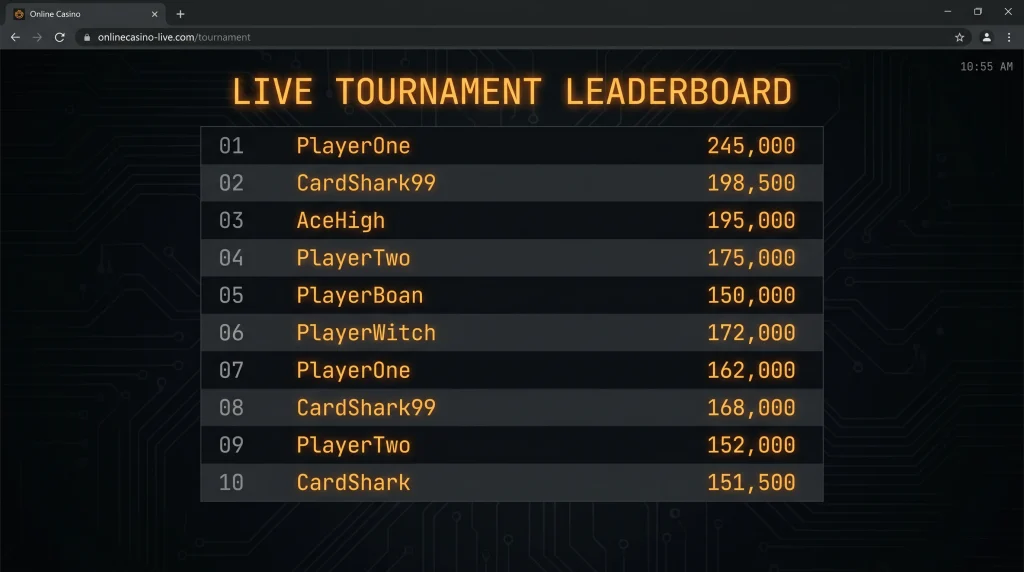
The tournament layer dominates the offshore promotional mix. About 84% of UK-targeted illegal-gambling promotional activity catalogued by Yield Sec carries “not-on-GamStop” framing, and a meaningful chunk of that promotional spend goes on tournaments and leaderboard races. The UKGC’s own enforcement leadership has been blunt about the structural dynamic at play — John Pierce, who runs UKGC Enforcement and Intelligence, has described the illegal market as adaptive and increasingly embedded in international digital ecosystems. Tournaments are part of the adaptation. They are the marketing format that UKGC operators struggle to match because the bonus and wagering reforms inside the UK regulatory perimeter limit how the prize layer can be structured. Offshore, those limits do not apply. What you get instead is a deeply gamified promotional architecture built around leaderboards, multipliers and time-limited windows. The rest of this piece is a working map of how it operates.
Leaderboards, Bet Multipliers, Last-Spin Races: Format Map
Four tournament formats cover the entire offshore landscape. Each interacts with the slot maths differently and each rewards a different player profile.
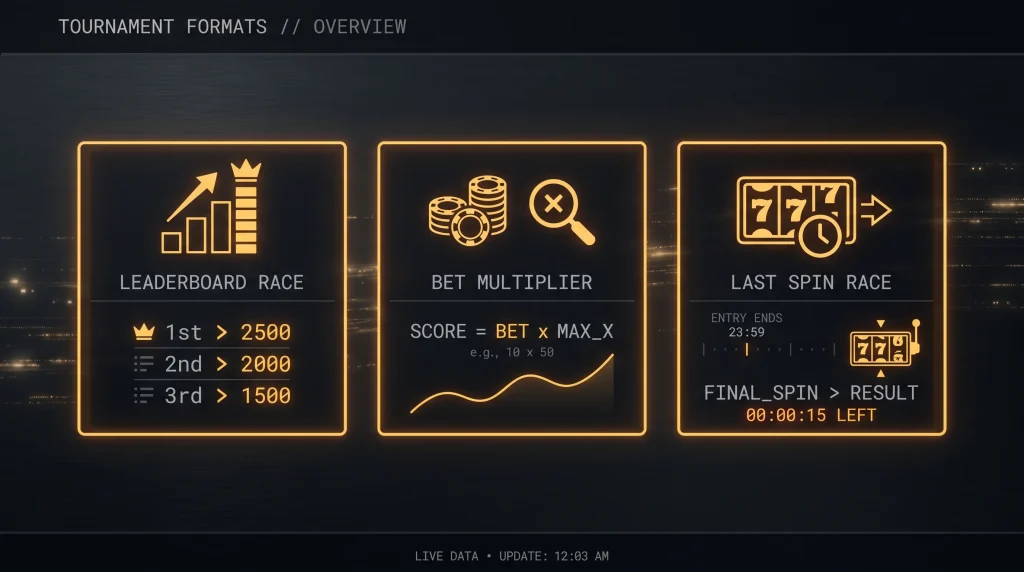
Leaderboard tournaments score players on aggregate metric — usually total points earned from spins across eligible titles over a fixed window. Points typically accumulate as a function of wager size multiplied by win-to-stake ratio, with optional multipliers for specific titles or bet sizes. The top X positions on the leaderboard at window close split the prize pool. Window lengths run from 24 hours to 30 days. This is the dominant format.
Bet-multiplier races score the largest single multiplier win on an eligible title across all participating players, with prize tiers awarded to the top N multipliers. Pure variance-driven format. A single lucky spin can win the race outright regardless of how much the player has wagered overall.
Last-spin races trigger on a specific event — a final spin before a deadline, the spin that pushes a counter past a threshold — and award a fixed pot to whoever lands the trigger. Lottery-style mechanic dressed as a tournament.
Cash drops are the format Pragmatic popularised with Drops & Wins. Random prizes drop into eligible spins across the participating player base, with the chance of drop weighted by bet size. Not a tournament in the leaderboard sense — more a continuous prize-pool distribution. I cover the network in detail at the studio’s Drops & Wins network that hosts most network races.
How a £1 Million Network Prize Pool Is Actually Distributed
The headline number on a tournament banner is rarely what you would assume. A £1 million network prize pool is typically distributed across hundreds or thousands of prize positions, with the top tier taking a single-digit-percentage slice of the total.
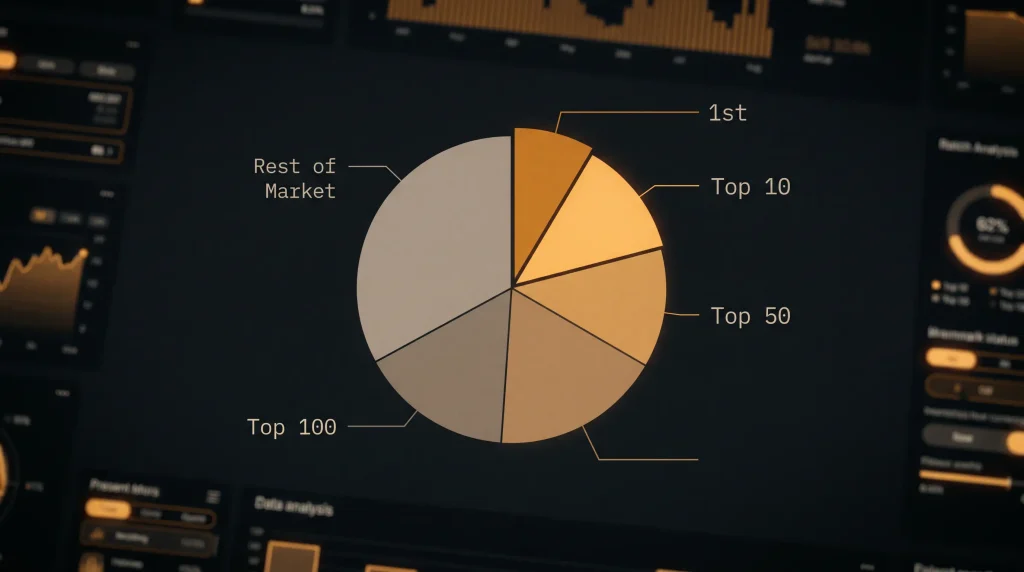
The typical distribution shape on a large network tournament: top position £25 000 to £100 000 depending on operator participation, second through tenth £5 000 to £25 000 each, eleventh through hundredth £500 to £5 000 each, hundredth through thousandth £50 to £500 each, with thousands of additional positions below that taking £10 to £50. Most participants fall into the tail or below the prize zone entirely. The top 1% of leaderboard positions typically capture 50% to 70% of the prize pool.
The prize pool itself is usually funded through a combination of contributions: operator marketing budget (a small slice), studio-network skim from eligible spins across all participating operators (the bulk), and sponsor contributions on rare occasions. For network tournaments running on Pragmatic, Push or Relax infrastructure, the skim rate is built into the eligible-title configuration. Pragmatic carries nine of the top-ten most-played slot positions on UK Q1 2025 charts, which makes its network reach the most attractive to operators wanting access to a large funded pool.
The player-facing implication: the displayed prize pool is the prize pool, but your individual probability of capturing any meaningful slice of it scales with wagering volume relative to the total field. At a £1 per spin pace on a tournament window receiving ten thousand active players, your individual probability of landing top-100 is mathematically very small unless your session volume sits at or above the field median.
Recurring Tournament Series at Non-GamStop Sites
The recurring tournament calendar at offshore venues has stabilised over the last two years around a small set of network races and a larger set of operator-specific weekly events.

Pragmatic Drops & Wins runs continuously and is by far the most visible network event. The structure is a rolling pool with daily and weekly prize distribution windows, eligible titles drawn from across the Pragmatic catalogue, and total monthly distribution typically in the £1 million to £3 million range depending on the active operator network. Most offshore operators that carry Pragmatic Play participate.
Push Gaming Drop’n’Win runs in a similar pattern at smaller scale — total monthly distribution typically £500 000 to £1 million. Relax Gaming runs a network tournament series around the Money Train and Hand of Anubis line, also smaller scale than Drops & Wins.
Operator-specific weekly tournaments are nearly universal at non-GamStop venues. Most operators run a Friday-to-Sunday leaderboard event with a £5 000 to £50 000 prize pool funded out of operator marketing budget rather than network skim. These tournaments typically have shallower prize distributions — top 20 or top 50 positions, with the top three or five taking the lion’s share — and lower player participation than network events.
Studio-specific tournaments run in irregular cycles around new releases. Hacksaw, Nolimit and Push routinely sponsor release-week tournaments to drive trial play on new titles. These are typically the highest-marketing-spend events of any given month and the prize structures are the most player-favourable.
Recommended online casinos
- ChanzeBonus: Slots Welcome Bonus #1 200% up to €500 · Payout speed: 1-3 business days
- ZombillionBonus: Welcome Pack 250% up to £4000 + 200 FS · Payout speed: 1-3 business days
- NightWinBonus: £900 + 400 free spins · Payout speed: 1-3 business days
- WinBeastBonus: €5000 + 500 FS + €650 Freebet · Payout speed: 1-3 business days
- EvoSpinBonus: 125% up to €2500 + 125 Free Spins · Payout speed: 1-3 business days
- SlotoSportBonus: 500% up to £ 10 200+ 777 FS · Payout speed: 1-3 business days
- BritsinoBonus: Welcome Package – Get your £2,200 + 2,000 FS · Payout speed: 1-3 business days
- BeOnBetBonus: 100% up to €500 + 100 FS · Payout speed: 1-3 business days
- AmunbetBonus: Join now and get 450% up to 2,700 GBP + 450 FS · Payout speed: 1-3 business days
Evaluating a Tournament Before Entering
Three checks before you ever submit a single qualifying spin. Skipping them is the difference between a deliberate session and a deposit walk.

First, read the prize distribution. The marketing copy will show the total pool. The detail page should show the prize tier breakdown — top position, top 10, top 100, total prize positions. If the breakdown is not published or is hidden behind a click-through, treat that as a signal worth weighting heavily. Most reputable tournaments publish full prize distributions in advance.
Second, read the prize-form terms. UK bonus wagering reforms capped UKGC bonus playthrough at 10× from 19 December 2025. Offshore tournament prizes do not sit under that cap. Many offshore tournaments pay the bottom 80% of the prize positions in bonus funds rather than cash, with 35× to 45× wagering attached to those bonuses. The cash positions are usually only the top tier or two. Read the prize-form schedule before assuming a leaderboard finish means a wire transfer.
Third, calculate the wagering-to-prize ratio you would need to land a prize zone. Look at the prior tournament’s winning leaderboard scores. Divide by the typical points-per-pound conversion rate. That tells you roughly the wager required to compete for top positions. If the number is larger than your bankroll by a meaningful multiple, you are entering as the field rather than as a contender.
How does a slot tournament leaderboard score actually accumulate?
Through a points formula that the operator publishes on the tournament detail page. The standard formula at offshore venues is: points equal stake size multiplied by the win-to-stake ratio on each spin, summed across all eligible spins inside the tournament window. Some tournaments multiply that base by an additional factor — 2x on featured titles, 1.5x during a happy hour, and so on — but the core mechanic is consistent. A £1 spin returning £10 generates 10 points; a £5 spin returning £10 generates 10 points as well, because the win-to-stake ratio is what counts. That structure rewards high-multiplier wins rather than high total turnover, which is why high-volatility slot titles dominate competitive leaderboards.
Are non-GamStop slot tournament prizes paid as cash or as wager-locked bonuses?
Both, and the split is set by the prize tier. The top of the leaderboard typically receives cash that is withdrawable subject to standard operator KYC. The middle tier — broadly positions 4 to 50 — often receives a mix of cash and bonus funds. The tail tier — positions 51 and below — almost always receives bonus funds with attached wagering. Offshore wagering on tournament prizes typically runs 35x to 45x, which sits well above the 10x cap UKGC introduced on bonus playthrough from 19 December 2025. The detail of what comes out as cash versus bonus is published in the tournament prize-tier breakdown — read it before assuming the position you finish in equals the value you receive.
What share of tournament participants typically reaches the prize zone?
On large network events, roughly 1% to 5% of active participants land in the prize zone — and within that pool, the top 1% captures the majority of distributed value. On smaller operator-specific weekly events, the prize zone is typically the top 20 to top 100 positions out of participant fields in the hundreds to low thousands, so the proportional reach is wider but the absolute prize values are smaller. Across every format I have tracked, the median outcome for a casual entrant is finishing well outside any prize-paying position. Tournaments are structurally a long-tail distribution where most of the funded prize value flows to a small number of high-volume players.
Articles
Written by the editors at non Gamstop slots UK.