
Pay by Phone Slots Not on GamStop and Boku Limits
 Available in GB
Phone Bill Deposit Alternatives for UK Players
Of every payment rail UK players use at UKGC-licensed slot venues, the rail with the lowest representation at the non-GamStop segment is pay-by-phone. The rail is widely available at UKGC venues — Boku and Payforit acceptance is mainstream UK gambling-cashier inventory — and it is functionally absent at the vast majority of non-GamStop alternatives. The reason is structural rather than incidental: the UK mobile-billing aggregators that process pay-by-phone gambling transactions operate under acceptance arrangements that require UKGC licensing as a precondition, and a venue without UKGC licensing cannot enter the acceptance arrangement on standard terms.
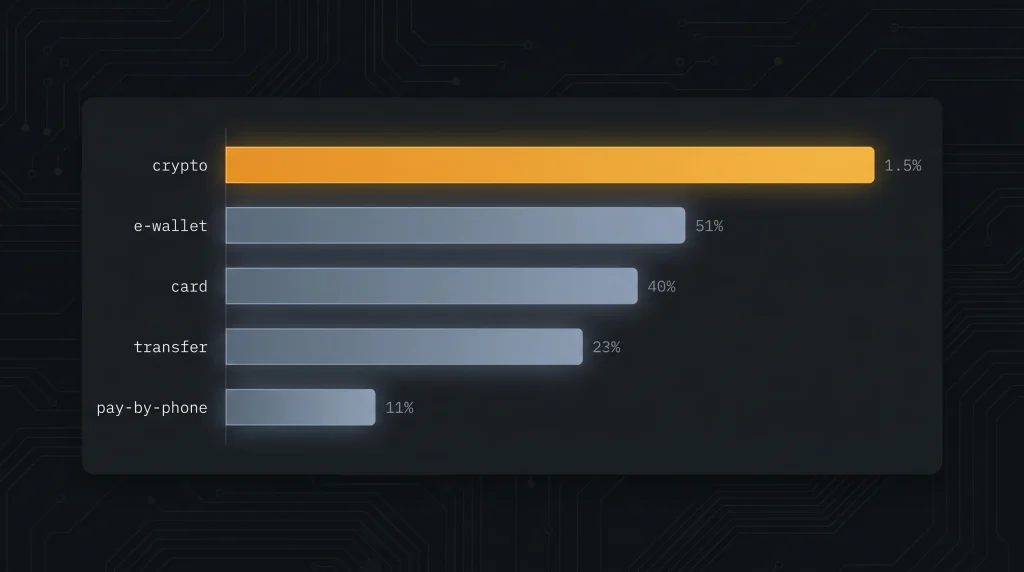
The UK mobile-network operators (EE, O2, Vodafone, Three, Virgin Mobile) are the underlying payment-rail providers and the aggregators (Boku, Payforit, formerly Payforit-aligned products) are the merchant-acceptance layer. The licensing-condition pattern at the aggregator level means the rail is operationally walled off from the non-GamStop segment. The piece walks through what pay-by-phone actually does, where the rare exceptions exist, the risks the rail introduces at venues that do offer it, and what alternatives fill the role for offshore players who would otherwise have chosen the rail.
How Boku and Payforit Process a Gambling Deposit
The pay-by-phone deposit flow at a UK gambling site runs through five layers and understanding the chain helps explain why the rail is constrained to UKGC venues.
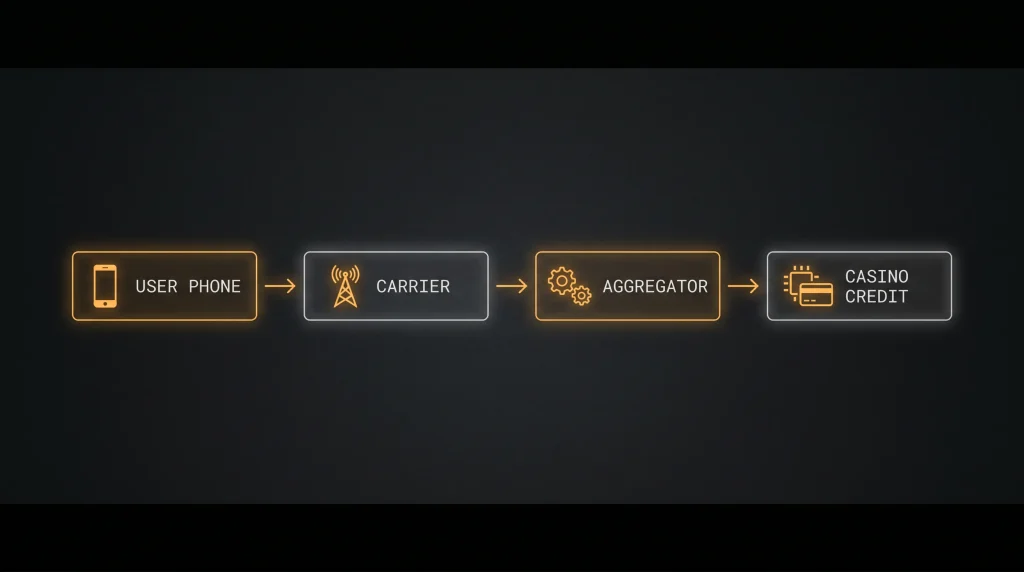
Layer one is the venue cashier. The player selects pay-by-phone, enters their UK mobile number, and the cashier initiates the deposit request to the aggregator (typically Boku for current UK gambling integrations, with Payforit historically having operated in the same role until its 2024 wind-down).
Layer two is the aggregator. The aggregator routes the request to the mobile network operator that owns the player’s number. The aggregator’s role is to provide a single integration point for the venue against multiple MNOs, abstracting the per-MNO billing differences and providing consolidated settlement and reporting to the merchant.
Layer three is the mobile network operator. The MNO receives the billing request, validates that the customer’s account supports the requested transaction (postpay accounts can typically authorise; prepay accounts require sufficient credit), and issues a confirmation request to the customer’s device. The confirmation typically arrives as an SMS that the customer replies to with a confirmation code, or as a USSD prompt on the device.
Layer four is the customer authorisation. The customer confirms the transaction via the SMS reply or USSD response. The MNO records the authorisation and applies the charge to the customer’s mobile-billing account (postpay) or deducts from credit balance (prepay).
Layer five is settlement. The MNO settles the transaction to the aggregator. The aggregator settles to the venue’s merchant account on a defined cycle (typically monthly, with the per-transaction value flowing through the MNO-aggregator-merchant chain after the aggregator’s fee deduction). The venue’s playing balance credits at the venue’s defined point in the chain — typically at customer authorisation rather than at settlement, with the venue taking the settlement-delay risk.
Where Pay-by-Phone Genuinely Exists Outside UKGC
The venues that offer pay-by-phone outside UKGC licensing are a small set and the offering at each typically has caveats that distinguish it from the standard UKGC pay-by-phone experience.
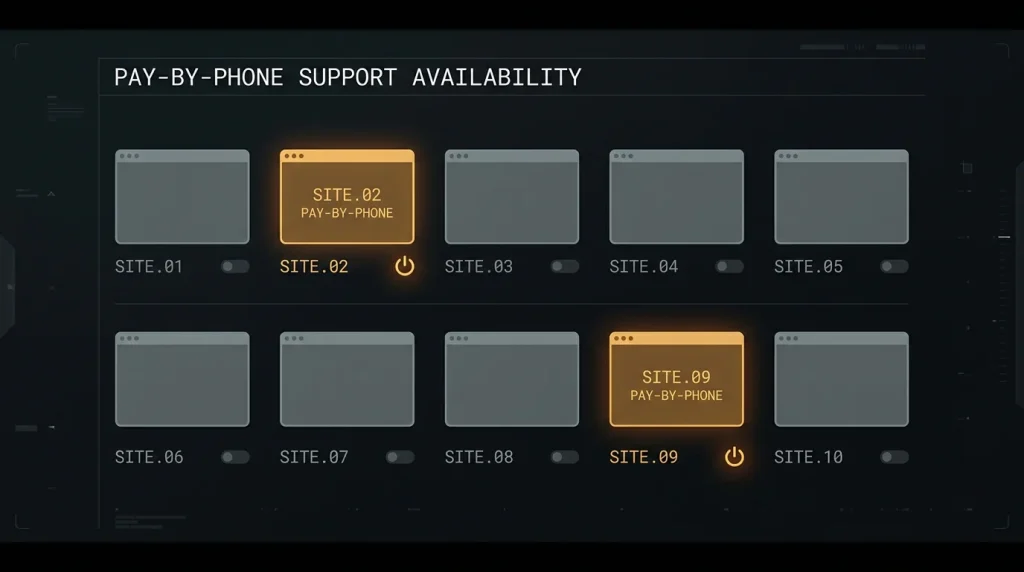
Pattern one is dual-licensed operator groups. Operators holding both UKGC and offshore licensing sometimes route pay-by-phone deposit attempts at the offshore brand through the UKGC entity’s aggregator integration, effectively borrowing the licensing-conditional acceptance arrangement. The pattern is operationally unstable — when the aggregator’s compliance review identifies the cross-brand routing, the acceptance is typically suspended for the offshore brand. Where it operates, the deposit experience is close to a standard UKGC pay-by-phone deposit but the offer’s longevity at any given venue is unpredictable.
Pattern two is alternative phone-bill aggregators with weaker compliance frameworks. A small number of non-UK aggregators offer mobile-billing acceptance to non-UKGC merchants, with the per-transaction limits typically lower than Boku’s UKGC arrangements and the MNO coverage typically narrower than full UK MNO coverage. The deposit experience differs from standard pay-by-phone — the per-transaction caps may sit at £5 or £10 rather than the £30 typical UKGC limit, and not every UK MNO supports the alternative aggregator’s flow.
Pattern three is voucher-conversion intermediaries that present as pay-by-phone in the venue cashier but actually run through a prepaid-voucher purchase routed via mobile billing. The player’s experience at the venue cashier reads as pay-by-phone selection, but the underlying transaction is a voucher purchase that converts to a deposit. The pattern carries the friction of an intermediate voucher step and the per-transaction limits of the underlying voucher product.
Risks: Daily Caps, Premium SMS Hooks, Withdrawal Mismatch
The pay-by-phone rail at offshore venues carries risk patterns that do not apply at UKGC venues, and players considering the rail at non-GamStop sites should understand the specific risks before depositing.
Daily and per-transaction caps are the first risk. UK MNO mobile-billing daily caps for gambling transactions sit at £30 per transaction and £240 per day under the standard UKGC arrangement. At offshore venues using alternative aggregators or voucher-conversion routes, the caps are typically lower per-transaction and the daily aggregate may be limited by the underlying voucher product’s structure. Players intending higher deposit volumes will run into the caps quickly and the workaround is typically to switch payment method rather than to extend the cap.
Premium-SMS hooks are the second risk. Some offshore venues using non-standard mobile-billing integrations route the transaction through premium-SMS infrastructure that operates outside the standard MNO direct-billing protocols. The premium-SMS chain carries higher per-transaction fees (often 30–50% of the transaction value rather than the 5–15% standard aggregator fee) and the fees fall on the customer’s mobile bill rather than the merchant. A £20 deposit via a premium-SMS chain may show as £25–£30 on the player’s mobile bill. The chain also typically does not produce a refundable transaction in the way standard mobile billing does — disputes are harder to resolve.
Withdrawal mismatch is the third risk and the most operationally distinctive. Pay-by-phone is fundamentally a one-way deposit rail in UK mobile-billing infrastructure — there is no equivalent reverse mechanism that pushes a credit from a merchant back to a customer’s mobile-billing account. Players who deposit via pay-by-phone at any venue (UKGC or offshore) cannot withdraw winnings to the same method. The venue requires an alternative withdrawal method (typically bank transfer or e-wallet) on file before processing withdrawal. At offshore venues this introduces an additional KYC step that some players are not prepared for at the withdrawal point.
The broader risk profile of the offshore segment matters here too. The Gambling Commission’s enforcement narrative on the unlicensed segment in current reporting cycles has noted year-on-year escalation in cases the regulator describes as criminal-grade, with one regulator statement noting a roughly 300% increase in criminal-grade unlicensed gambling cases over the past year
. The pay-by-phone rail in the offshore segment specifically concentrates in operators outside the well-licensed mainstream because of the structural acceptance constraint described above, and the player should weight the rail’s appearance at a venue against the broader operator profile rather than treating pay-by-phone availability as a positive signal in itself.
Alternatives When Pay-by-Phone Is Not Offered
For UK players whose preference for pay-by-phone reflects the rail’s specific characteristics rather than incidental habit, the alternative-rail mapping depends on which characteristic drove the original preference.
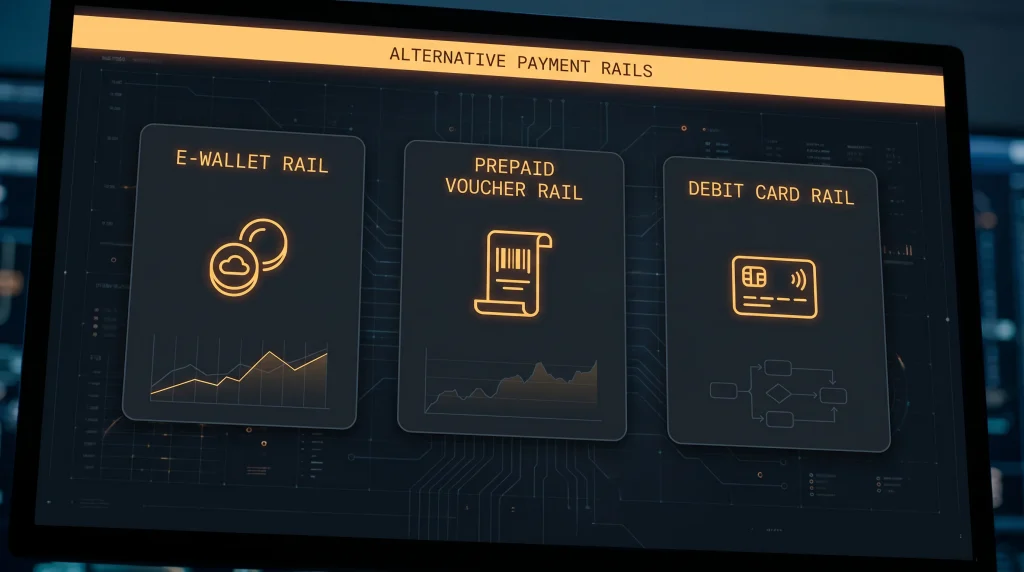
If the preference was the no-banking-app-needed property — the rail’s appeal is that the deposit completes through the player’s mobile phone bill without requiring a separate banking-app interaction — the closest functional equivalent at offshore venues is e-wallet rails with mobile-app integration (MuchBetter specifically, which is designed for mobile-first interaction; Apple Pay and Google Pay routing through participating venues). These rails preserve the mobile-first deposit experience while operating outside the mobile-billing infrastructure.
If the preference was the small-deposit-amount property — pay-by-phone is convenient for £5–£20 deposit amounts that feel disproportionate to set up a bank-card relationship for — the closest equivalent is voucher-based rails (paysafecard, Neosurf) which offer fixed-denomination prepaid vouchers purchased at retail and redeemed at the venue. The voucher rails support small amounts well and carry their own anonymity properties similar to pay-by-phone.
If the preference was the separation-from-bank-account property — pay-by-phone keeps the gambling transaction off the player’s bank statement — the alternatives are limited and the trade-offs are significant. Crypto rails offer a separation route but require the player to acquire the crypto on-ramp first. Voucher rails offer a separation route but at the cost of fixed denominations and retail purchase friction. There is no single offshore alternative that replicates the pay-by-phone separation property cleanly.
For the wider context on mobile slot play and the broader mobile-first experience at offshore venues, see mobile slots not on GamStop.
Frequently Asked Questions
Can Boku actually deposit to a non-GamStop slot site in 2026?
At the standard Boku-aggregator integration tier, no — Boku”s UK gambling-merchant acceptance arrangements with the UK mobile network operators require UKGC licensing as a precondition, and standard Boku acceptance is therefore not available to non-GamStop operators. A small number of non-GamStop venues offer pay-by-phone through alternative integration routes (dual-licensed operator routing, alternative non-UK aggregators, voucher-conversion intermediaries) but these are operationally unstable and not the same product experience as Boku at a UKGC venue.
Does a phone-bill slot deposit show up on a standard UK mobile invoice?
Yes. Mobile-billing deposits at any gambling venue appear on the customer”s mobile invoice as a line-item charge from the aggregator or the underlying voucher merchant, with the merchant name typically reflecting the aggregator rather than the gambling venue specifically. The transaction is identifiable as a non-mobile-service charge through its merchant-name attribution. The deposit is not anonymised by the routing through the mobile-billing infrastructure — it is just routed via the mobile bill rather than the bank statement.
Why is there no pay-by-phone withdrawal option at non-GamStop slot sites?
Pay-by-phone is structurally a one-way rail in the UK mobile-billing infrastructure. The MNO-aggregator-merchant chain operates as a customer-to-merchant payment flow and there is no reverse-flow infrastructure that would push a merchant credit back to a customer”s mobile-billing account. The limitation applies at all venues — UKGC and offshore — and players depositing via pay-by-phone always need to nominate a separate withdrawal method (bank transfer, e-wallet, card) for any winnings to be paid out.
Articles
Created by the "non Gamstop slots UK" editorial team.