
High Stake Slots Not on GamStop and VIP Limit Mechanics
 Available in GB
VIP Limits and Big Withdrawals at High Stake Slots
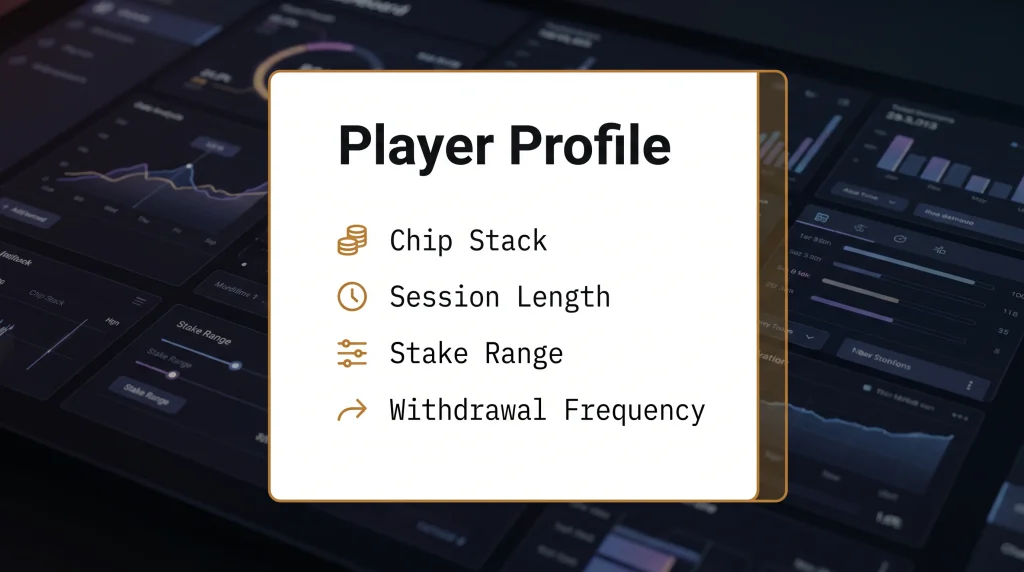
The player profile that anchors the offshore VIP tier at non-GamStop slot venues is narrower than the marketing pitch implies. Most accounts the operators tag as VIP are not players whose spin sizes routinely run into the hundreds — they are players whose deposit cadence is high and consistent enough that the operator’s lifetime-value model places them in the top deciles. The actual high-stake spin segment, where £100+ per spin is the working stake, is a much smaller population sitting inside the broader VIP tag and has its own specific operational profile.
The 9 April 2025 £5 stake cap at UKGC-licensed venues compressed the high-stake population’s onshore options and pushed a meaningful share to the offshore segment in the months that followed. The migration showed up in offshore-segment growth telemetry alongside the broader 9% black-market share figure in current UK gambling activity. This piece walks through what ‘high stake’ actually means at the offshore segment, what the VIP programmes deliver and don’t, and where the risk controls sit (or do not) at the top tier.
Defining “High Stake”: £10, £100, £500 per Spin
The ‘high stake’ label covers three distinct stake bands at the offshore segment and the operator infrastructure that supports each is meaningfully different.
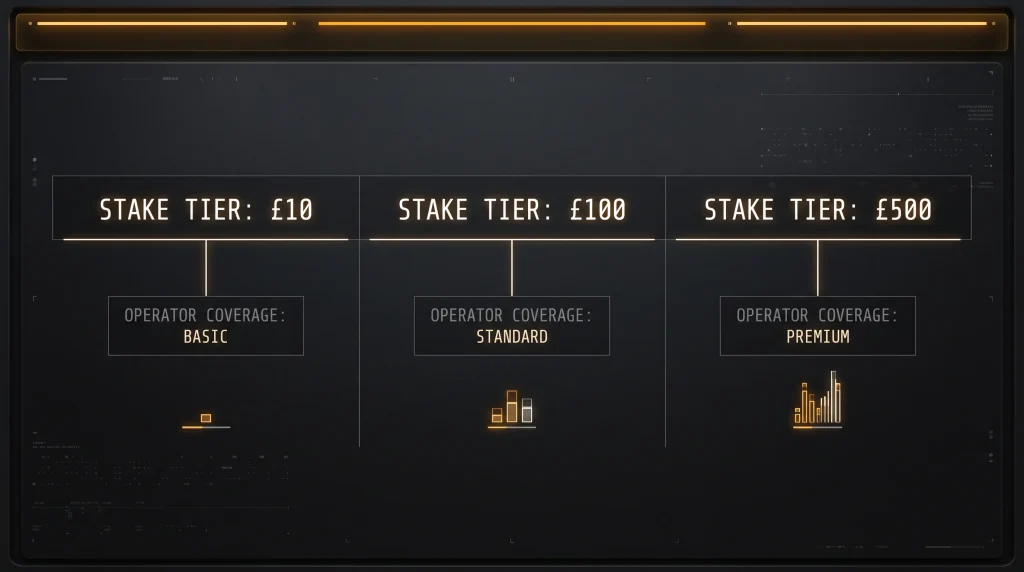
The £10–£25 per spin band is the upper end of mainstream stake configuration at most offshore venues. The stakes fit within standard cashier limits, standard payment-rail capacity, and standard customer-support response infrastructure. Players in this band are routine accounts from the operator’s perspective and the VIP-programme entry typically requires deposit volume rather than per-spin stake. Most offshore venues serve this band as a baseline product.
The £50–£100 per spin band is the working ceiling of standard non-VIP access at most offshore venues. The stakes are above the cashier defaults at most venues but below the operator-level caps. Accessing this band routinely usually requires either explicit stake-limit increase request through customer support or qualifying for the venue’s mid-tier loyalty programme. The slot content available at these stakes is somewhat narrower than at lower stakes because not every title supports the upper range — slot studios cap maximum stake per title at certification and many titles cap below £100.
The £200–£500 per spin band is the VIP-only segment. Accessing this band requires either venue-side VIP enrolment or operator-tier upgrade with case-by-case approval. The slot content that supports these stakes is a small subset of the full catalogue — typically the higher-cap titles from studios that have certified the higher stake ranges, with the title’s maximum stake capped at the studio level (most studios cap at £100, £200 or £500 with a small number going higher). Stakes above £500 are typically not configured at the venue cashier level at all and are handled through bespoke account-management arrangements outside standard play.
Recommended online casinos
- ChanzeBonus: Slots Welcome Bonus #1 200% up to €500 · Payout speed: 1-3 business days
- ZombillionBonus: Welcome Pack 250% up to £4000 + 200 FS · Payout speed: 1-3 business days
- NightWinBonus: £900 + 400 free spins · Payout speed: 1-3 business days
- WinBeastBonus: €5000 + 500 FS + €650 Freebet · Payout speed: 1-3 business days
- EvoSpinBonus: 125% up to €2500 + 125 Free Spins · Payout speed: 1-3 business days
- SlotoSportBonus: 500% up to £ 10 200+ 777 FS · Payout speed: 1-3 business days
- BritsinoBonus: Welcome Package – Get your £2,200 + 2,000 FS · Payout speed: 1-3 business days
- BeOnBetBonus: 100% up to €500 + 100 FS · Payout speed: 1-3 business days
- AmunbetBonus: Join now and get 450% up to 2,700 GBP + 450 FS · Payout speed: 1-3 business days
VIP Programmes at Non-GamStop Slot Sites
The VIP programme structure at offshore venues divides into three patterns and the player experience differs sharply between them.

Pattern one is the tier-based loyalty programme. The venue operates a structured tier system (Bronze through Diamond, or numbered tiers) with progression driven by deposit volume or wagering volume over rolling periods. Tier benefits include enhanced cashback percentages, faster withdrawal processing, dedicated account-manager assignment at upper tiers, and bespoke bonus offerings outside standard promotional inventory. Tier progression is usually formulaic and the player can see the requirements for the next tier in the loyalty programme detail.
Pattern two is the invitation-based VIP scheme. The venue operates a parallel VIP track that does not have published entry criteria and instead invites players based on the operator’s commercial assessment of the account. The invitation typically arrives by email or through the account manager when the operator wants to retain or escalate a high-value account. The opacity of the entry criteria is structural rather than accidental — the venue wants the ability to extend bespoke arrangements to specific accounts without setting benchmarks that all comparable accounts would expect.
Pattern three is the bespoke high-roller arrangement. At the upper end, individual players negotiate stake limits, bonus structures, withdrawal-priority arrangements and account-management coverage directly with the operator’s VIP team. The arrangement sits outside the venue’s published VIP programme and the specific terms are confidential to the player and the operator. The leverage the player has in the negotiation depends on the operator’s competitive position and the player’s demonstrated lifetime value.
Risk Controls (Or the Lack of Them) at the Top Tier
The risk controls at the top tier of the offshore VIP segment are where the gap from UKGC supervision is widest. The UKGC framework requires affordability assessment, source-of-funds verification, and behavioural-pattern monitoring at the high-spend tier that the offshore segment does not consistently replicate.
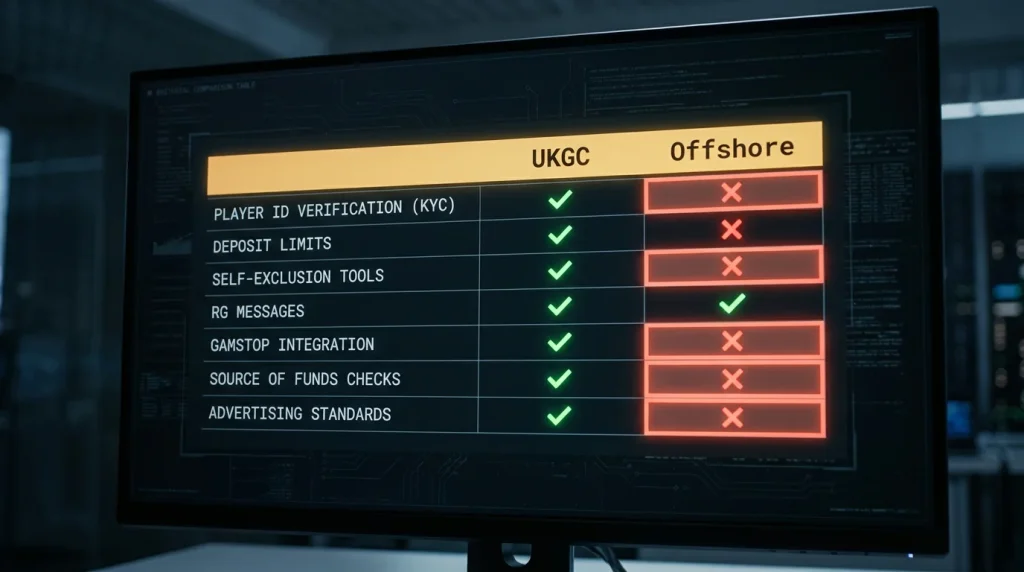
UKGC’s Financial Risk Assessment framework operates at the £150 net-deposit threshold per 30 days with frictionless completion in 97% of triggers, escalating to substantive affordability assessment for accounts the framework’s risk-scoring flags. At UKGC venues, a player whose deposit pattern reaches material spend levels will go through the assessment process automatically. The framework’s regulator-side enforcement means the operator cannot opt out of conducting the assessment regardless of the commercial impact on retention.
Offshore venues operate AML source-of-funds checks at defined deposit and withdrawal thresholds but the affordability-assessment overlay does not exist as a regulator-driven requirement. The operator’s own risk appetite determines whether and how affordability checks run at the high-stake tier. Some MGA-licensed operators apply substantive affordability checks comparable to UKGC practice. Many Curaçao-licensed and Anjouan-licensed operators apply only the AML source-of-funds layer without affordability-specific review. The variation is operator-specific rather than predictable from the licensing jurisdiction.
The 21.9% of UK 18–24-year-olds reporting PGSI scores of 1–27 in the most recent prevalence data and the 5.3% in the highest 8–27 category give the population context. The top-tier VIP segment at offshore venues overlaps materially with the high-risk gambling population the prevalence data identifies, and the absence of regulator-required affordability infrastructure at most offshore venues is the structural feature that distinguishes the segment from UKGC most starkly.
Payout Behaviour on £20 000+ Withdrawals
The payout behaviour at the high-value withdrawal segment is where operational quality varies most sharply across the offshore population and where the choice of operator matters most.
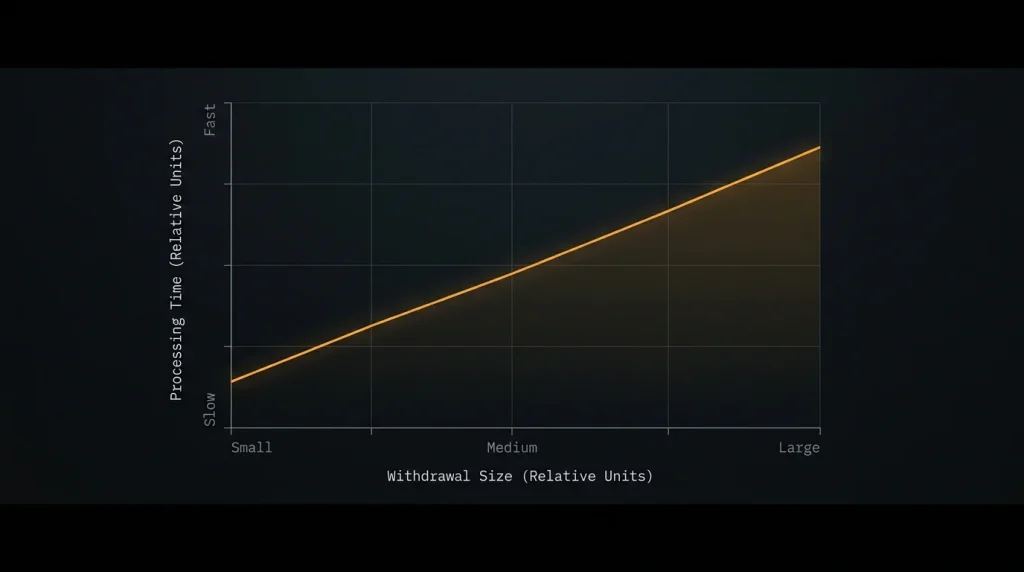
Well-run offshore operators (the competently-run subset of MGA-licensed and post-LOK Curaçao-licensed venues, plus a small cohort of well-capitalised Anjouan venues) typically process £20 000+ withdrawals within 24–72 hours subject to source-of-funds verification and any required additional KYC documentation. The withdrawal usually splits across multiple settlement transactions if the rail’s per-transaction limit requires (bank wire ceilings, card-rail per-transaction caps), with the total settling within the same window.
Less well-run operators introduce friction at the high-value withdrawal point in patterns that range from procedural delay (extended source-of-funds review, repeated documentation requests, weekly partial-payment caps) to substantive denial (citing bonus-term violations, account-irregularity findings, or AML concerns that the operator did not raise during the wagering that produced the balance). The friction tactics concentrate at the high-value point specifically because the operator’s commercial exposure is highest there.
The signals that distinguish well-run from poorly-run operators at the high-value withdrawal segment are visible before deposit. Third-party mediation participation (AskGamblers, CasinoMeister registration), transparent published withdrawal-time data, operator history depth, and licensing jurisdiction quality all correlate with payout behaviour at the high-value tier. Players intending to play at high stakes should verify these signals before committing deposit volume, because the recovery options at the withdrawal point are weaker than the negotiation leverage available before the deposit relationship begins.
The 96.3% UKGC withdrawal auto-processing rate in the June–September 2024 telemetry sets the benchmark the well-run offshore operators approach and the poorly-run operators do not approximate. The gap between the two ends of the offshore distribution is wider at the high-value tier than at smaller withdrawal sizes.
For the broader context on the cap framework that drove the high-stake migration to the offshore segment, see slot sites without the UK £5 stake limit.
Frequently Asked Questions
Is there a hard ceiling on spin size at non-GamStop slot sites?
Yes, but the ceiling is set at the operator and the slot-content level rather than by any regulatory framework binding the venue. Most offshore venues operate cashier ceilings in the £100–£500 range for standard play, with higher stakes available through VIP-tier arrangement or bespoke account-management agreements. Slot titles themselves cap maximum stake at the studio”s certification level — most titles cap at £100 or £200, with a small subset of high-stake-certified titles going to £500 or higher. Genuinely unlimited stakes do not exist anywhere in the regulated or offshore segments.
Do high-stake players at offshore sites still face affordability checks?
It depends on the operator. MGA-licensed venues operating to MGA”s risk-based framework typically apply affordability review at the high-stake tier comparable to UKGC practice. Curaçao-licensed and Anjouan-licensed venues typically apply AML source-of-funds checks at defined thresholds but not affordability-specific review unless the operator”s own risk policy requires it. The variation is operator-specific and the absence of a regulator-mandated framework means the operator can choose to forego affordability assessment in a way that UKGC-licensed venues cannot.
How are six-figure withdrawals processed at non-GamStop slot operators?
At well-run operators, six-figure withdrawals typically split across multiple settlement transactions to fit payment-rail per-transaction limits, with the total settling within 48–96 hours subject to source-of-funds verification and any additional KYC documentation. At less well-run operators, six-figure withdrawals frequently encounter weekly partial-payment caps that extend the total payout window to multiple weeks, or procedural friction (repeated documentation requests, extended review windows) that delays settlement materially. Operator selection at deposit time is the single largest predictor of payout experience at this withdrawal size.
Articles
Written by the editors at non Gamstop slots UK.