
Slingo Sites Not on GamStop and Hybrid Game Mechanics
 Available in GB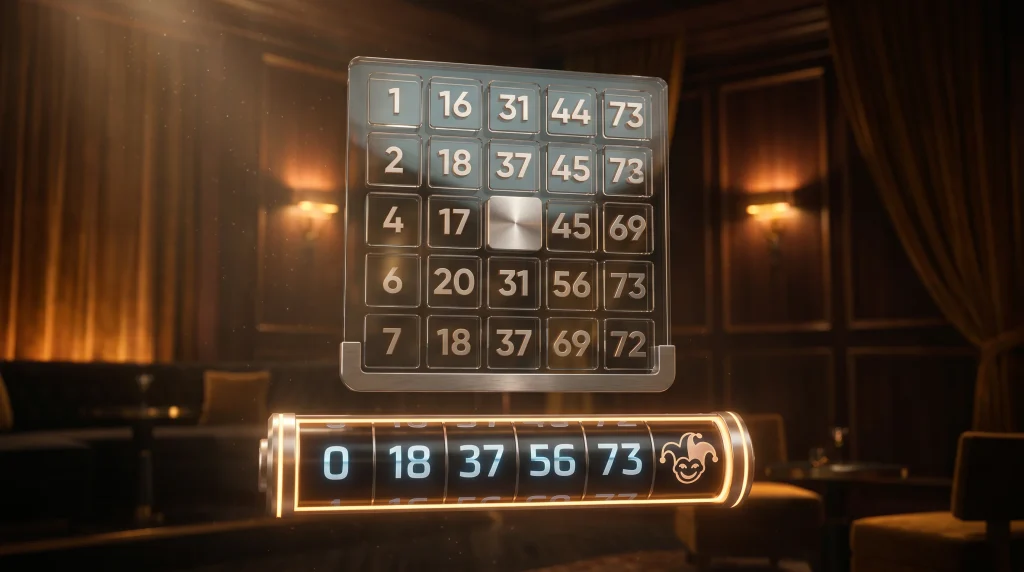
Structure and Buy-In Costs of Offshore Slingo
Slingo is the slot-bingo hybrid that most UK players first encountered at UKGC-licensed venues during the 2018–2022 expansion of the format from a niche category into a mainstream sub-segment of the wider slot lobby. The game has the structural footprint of a slot in its session economics — single-player, fixed stake per game, fast resolution, RTP-defined long-run return — and the structural footprint of bingo in its win-mechanic — daubed numbers on a grid, line completions as the win condition. The hybrid is more coherent in play than the description sounds.
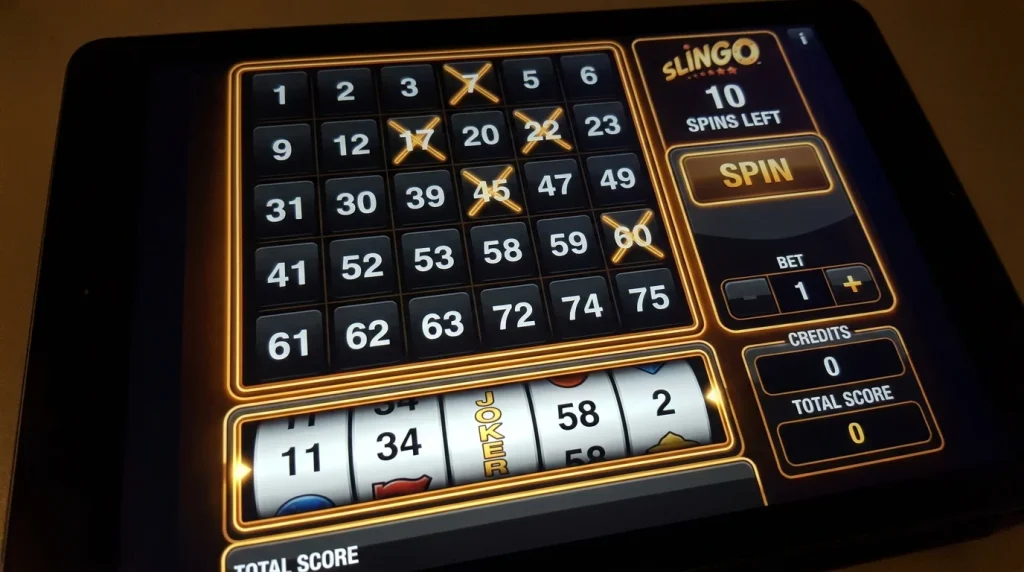
The non-GamStop segment carries the format because the Slingo Originals studio behind the canonical catalogue distributes broadly through the same aggregator networks that handle slot content, and offshore operators load the catalogue alongside their slot inventory as a small but distinct vertical. The session profile differs enough from standard slots that Slingo deserves a separate treatment, and this piece is that treatment — the round mechanics, the Slingo Originals catalogue, the RTP-and-buy-in economics, and the venue coverage pattern at non-GamStop sites.
How a Slingo Round Actually Plays Out
A Slingo round runs through a fixed sequence of spins on a single ticket, with the player’s win condition resolved at the end of the round. The mechanic is structured rather than open-ended in the way a slot session is.
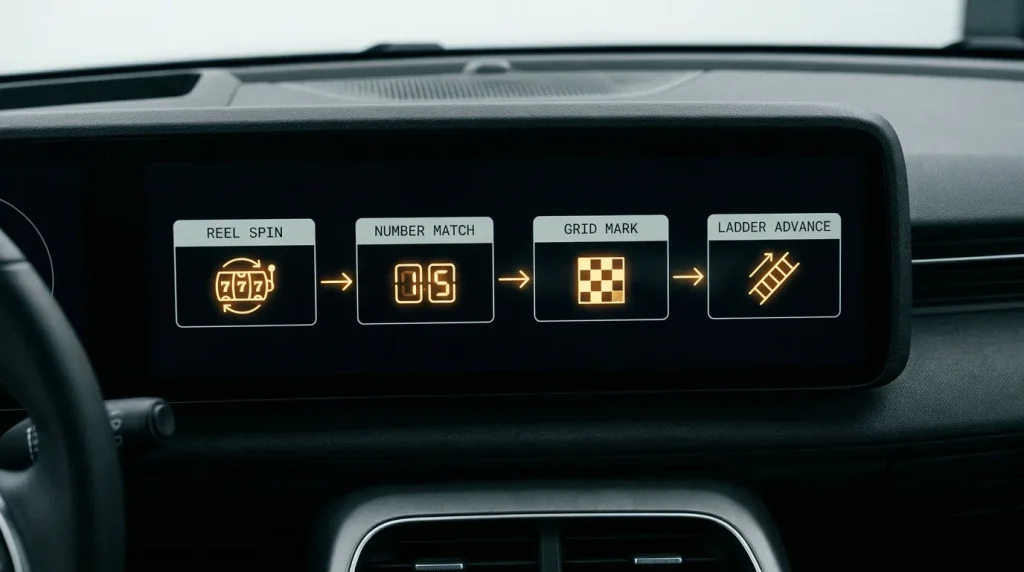
The setup is a 5×5 grid of numbers (1 to 75 in the standard variant, with each grid showing 25 of the 75 numbers in random positions). Below the grid sits a single reel of 5 columns, each column carrying numbers from the corresponding column of the grid plus special symbols (free spins, jokers, devil symbols). The round begins with a standard allocation of base spins (typically 10–11 spins) and the player can buy additional spins at the end of the base allocation if the position warrants continuing.
Each spin produces a row of 5 symbols across the bottom reel. Where a symbol matches a number on the grid above its column, that number daubs (marks off the grid). Joker symbols daub any number in their column. Super-joker symbols daub any number on the grid. Devil symbols block daubing on their column for that spin. Free-spin symbols add to the round’s remaining spin count.
The win mechanic is line completion on the grid. Completing one full line (horizontal, vertical or diagonal) is one Slingo. The pay-table credits the player for the line count completed at the round’s end — typically with a payout that escalates non-linearly through the line counts, with full-house (all 12 possible lines including the diagonals) producing the maximum win. Most titles cap the maximum win at the full-house outcome with an additional progressive ladder of payouts at lower line counts.
The buy-extra-spin decision sits at the end of the base allocation. The player sees their current grid state, the buy cost for the next spin (which escalates as the round progresses), and the line-count payouts available. The decision is the player’s own expected-value calculation against the position. The buy mechanic is one of the format’s distinguishing features and is the layer where the format diverges most from standard slot play.
The Slingo Originals Catalogue Available Offshore
The Slingo Originals studio (owned by Gaming Realms) is the primary content producer for the format and its catalogue spans the canonical entries that define the segment. Most non-GamStop venues that carry Slingo load the full Slingo Originals catalogue rather than competitor-studio Slingo variants.
Slingo Rainbow Riches is the format’s mainstream anchor — the Rainbow Riches brand licensed into the Slingo template, with the Pots of Gold and Cash Crop bonus features from the standard Rainbow Riches slot integrated as round-end bonus triggers. Default RTP 95.00%. Max win 500× stake. The title’s brand recognition carries player adoption and it is the most-loaded Slingo title at offshore venues in the lobby analytics I have visibility into.
Slingo Reel King takes the Reel King slot’s bonus mechanic and integrates it as a Slingo round-end bonus. Default RTP 95.45%. Max win 1 200× stake. The integration runs the Reel King bonus on the round-end full-house or near-full-house outcomes, with the bonus mechanic producing variable additional payouts above the standard pay-table.
Slingo Starburst applies the same brand-integration template to NetEnt’s Starburst slot. Default RTP 95.92%. The title operates a Starburst-themed grid and bonus mechanic with the standard Slingo round structure.
Slingo XXXtreme is the studio’s volatility-focused variant. Default RTP 95.00%. Max win 5 000× stake. The title runs a multiplier mechanic across the round that compounds the line-count payouts, producing meaningfully higher upper-tail outcomes than the standard catalogue’s max-win profile.
The full catalogue extends to 30+ titles including brand-licensed variants (Deal or No Deal Slingo, Britain’s Got Talent Slingo) and the studio’s own-IP titles (Slingo Showdown, Slingo Money Spins). Coverage at non-GamStop venues runs the full catalogue at venues that integrate the studio’s content and a subset at venues that selectively load the most-played titles.
Slingo RTPs, Buy-In Costs and Bonus Ladders
Slingo RTPs sit at the lower end of the slot RTP range, typically 95.0% to 95.92% across the Slingo Originals catalogue. The lower RTP relative to typical slots reflects the format’s distinct mathematical model — the round-based structure with discrete buy decisions produces a different return distribution than continuous spin play, and the RTP calculation incorporates the player’s expected buy-decision pattern.
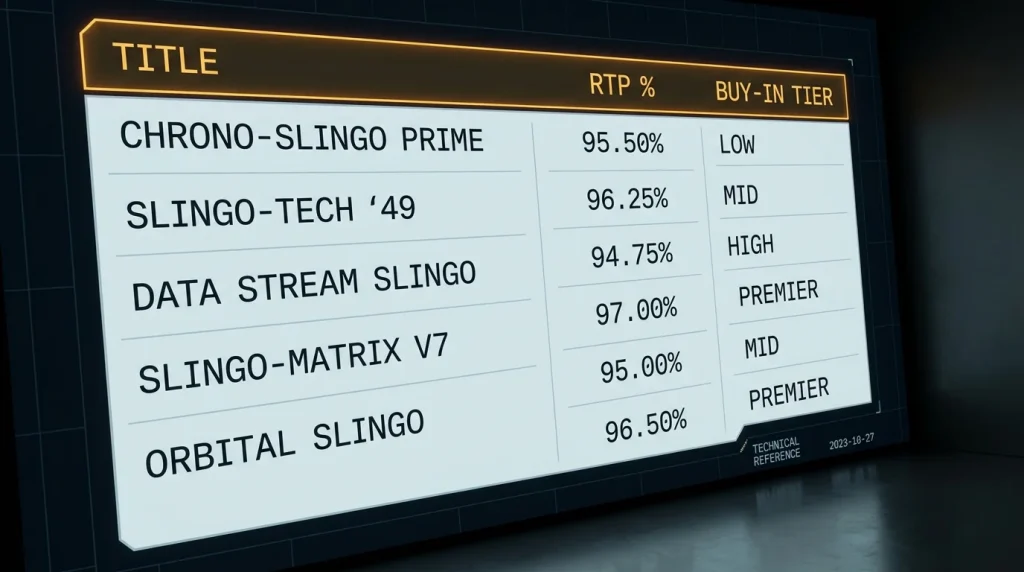
The base round cost is the entry stake — typically £0.50 to £5.00 depending on title and player selection at the round start. The base cost buys the initial spin allocation (10–11 spins) and the grid setup. The base cost is the only mandatory cost — a player who declines all extra-spin buys at the end of the base allocation pays the base cost only.
The extra-spin buy costs escalate as the round progresses. The first extra spin typically costs roughly the same as the base cost. The second extra spin costs more. The escalation produces a buy-cost curve that reflects the diminishing probability of meaningful additional line completions as the round consumes the grid. By the 15th–20th spin, individual extra-spin buy costs can reach multiples of the base cost.
The pay-table structure is non-linear. A 1-line outcome typically pays at or below the base cost — the player loses on a one-Slingo round. A 4-line outcome pays a meaningful multiple of the base. A full-house pays the title’s max-win cap (typically 500× to 5 000× the base cost). The non-linearity means most rounds break even or lose, with the upper-tail full-house outcomes carrying the format’s positive-EV mass.
The bonus-ladder feature on the brand-licensed titles adds a separate progressive component. The Slingo Reel King bonus, the Slingo Rainbow Riches Pots of Gold trigger and equivalent features at other titles run on top of the line-count payouts and can produce wins independent of the round’s Slingo position. The bonus features are typically free-spin or pick-bonus structures that play out at the round’s end.
Where Slingo Loads at Non-GamStop Sites
Slingo coverage at non-GamStop venues follows the aggregator distribution pattern that characterises most second-tier studio content. The Gaming Realms studio relationship with major aggregators (Relax Gaming Silver Bullet, Pariplay Fusion, Soft2Bet’s content network) puts Slingo Originals content into roughly 50–60% of the active non-GamStop venue set.
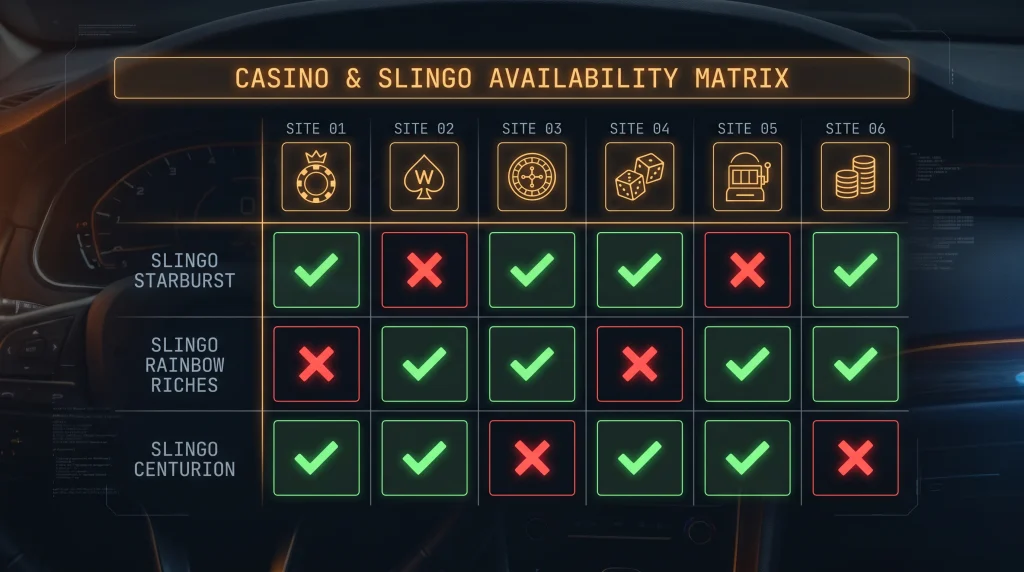
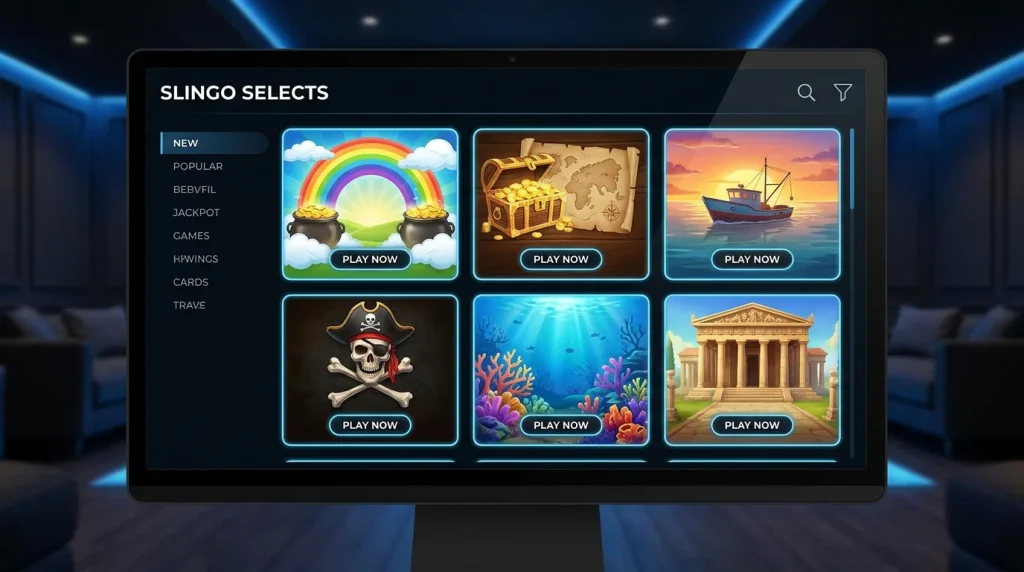
The lobby placement at venues that carry Slingo varies. Some venues integrate Slingo into the main slots category with the catalogue browseable alongside standard slot titles. Other venues operate a separate Slingo lobby category that the player needs to navigate to specifically. A third pattern operates a ‘specialty games’ or ‘instant win’ category that bundles Slingo with scratch cards, virtuals and other non-slot vertical content. The integration choice affects the format’s visibility — players who navigate venues by slot category may miss the Slingo content at venues using the separate-category approach.
Search filtering by studio name (Slingo Originals or Gaming Realms) is the most reliable navigation path at venues with structured lobby filtering. Search by title name is the fallback at venues without studio filters. Cross-venue consistency in Slingo coverage is high relative to slot studios with more fragmented distribution — the same Slingo title at one venue carrying the catalogue will almost certainly be at the other venues carrying the catalogue, with venue-specific RTP variants the main differentiator.
For the related question of whether the bonus-buy mechanic that integrates with Slingo’s round structure operates differently at offshore versus UKGC venues, see bonus buy slots not on GamStop.
Recommended online casinos
- ChanzeBonus: Slots Welcome Bonus #1 200% up to €500 · Payout speed: 1-3 business days
- ZombillionBonus: Welcome Pack 250% up to £4000 + 200 FS · Payout speed: 1-3 business days
- NightWinBonus: £900 + 400 free spins · Payout speed: 1-3 business days
- WinBeastBonus: €5000 + 500 FS + €650 Freebet · Payout speed: 1-3 business days
- EvoSpinBonus: 125% up to €2500 + 125 Free Spins · Payout speed: 1-3 business days
- SlotoSportBonus: 500% up to £ 10 200+ 777 FS · Payout speed: 1-3 business days
- BritsinoBonus: Welcome Package – Get your £2,200 + 2,000 FS · Payout speed: 1-3 business days
- BeOnBetBonus: 100% up to €500 + 100 FS · Payout speed: 1-3 business days
- AmunbetBonus: Join now and get 450% up to 2,700 GBP + 450 FS · Payout speed: 1-3 business days
Frequently Asked Questions
Is Slingo classed as a slot or a bingo product for offshore licensing?
The classification varies by jurisdiction. Most offshore licensing frameworks treat Slingo as a slot product for licensing purposes because the single-player structure, RTP-defined return and fixed-stake mechanic align with slot regulatory templates rather than bingo templates. Some jurisdictions with separate bingo licensing categories classify Slingo as a bingo product based on the win-mechanic. The classification affects which licence category an operator needs to carry the content but does not affect the player experience materially at venues that have the right licensing for both verticals.
Are bonus-buy features available on Slingo at non-GamStop sites?
Yes, in two distinct senses. The extra-spin buy mechanic that is structurally part of every Slingo round operates identically at UKGC and non-GamStop venues — the buy-extra-spin decision at the end of the base allocation is part of the game”s standard mechanic and is not affected by the UKGC bonus-buy ban. The separate buy-bonus-feature mechanic that some Slingo titles offer (direct purchase of the round-end bonus trigger) is offshore-only, mirroring the wider UKGC ban on buy-feature mechanics from October 2021.
Does the £5 spin cap apply to Slingo at UKGC sites?
Yes. The UKGC £5 stake cap from 9 April 2025 applies to all online slot products at UKGC-licensed venues and Slingo”s slot classification under UKGC means the cap applies to the base round entry stake. The £2 cap for 18–24-year-olds from 21 May 2025 also applies. Non-GamStop venues operate under the venue”s own stake limits and the regulatory caps do not bind there, with typical Slingo base stakes available up to £5–£25 at offshore venues depending on title and operator configuration.
Articles
Created by the "non Gamstop slots UK" editorial team.